Latest News
Research & Innovation, Clinical Care, Community Engagement
Leaps and bounds in radiation oncology: Putting patients at the center of their cancer care
Mar 10, 2026
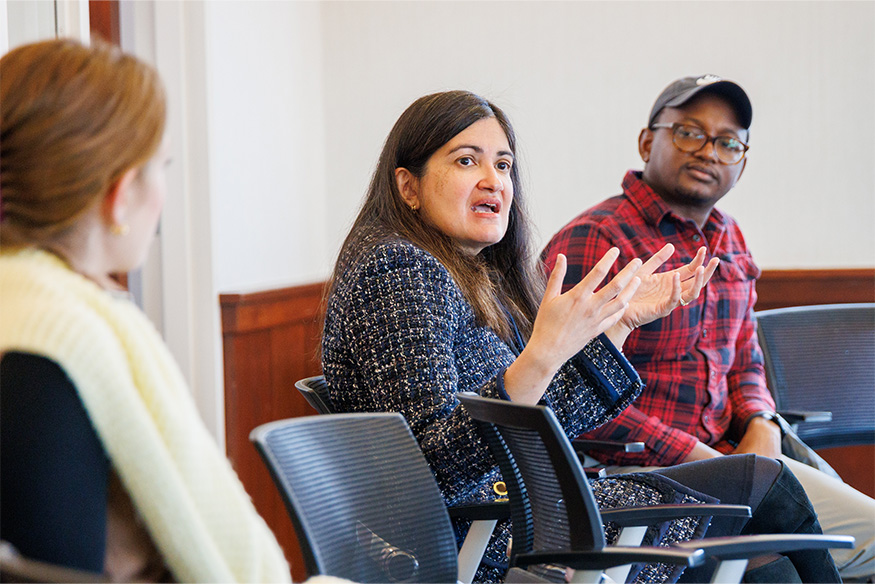 Reshma Jagsi, M.D., D.Phil, visited Richmond on Feb. 24-25 as part of the Director’s Distinguished Visiting Scholars Seminar Series, organized by VCU Massey Comprehensive Cancer Center.
Standing before a room of medical experts and physician-scientists, Reshma Jagsi, M.D., D.Phil, called on her peers to empower their patients by making informed decisions together to optimize and personalize the cancer care that is right for each one of them.
“We owe our patients patient-centered care,” Jagsi said with firm conviction.
Jagsi, the Lawrence Chair of the Department of Radiation Oncology at Winship Cancer Institute of Emory University, was visiting Richmond on Feb. 24-25 as part of the Director’s Distinguished Visiting Scholars Seminar Series, organized by VCU Massey Comprehensive Cancer Center, and hosted at The Valentine. Her internationally recognized interdisciplinary research spans clinical trials, health services studies and bioethics, with a focus on the individualization of breast cancer care and the promotion and career development of physicians.
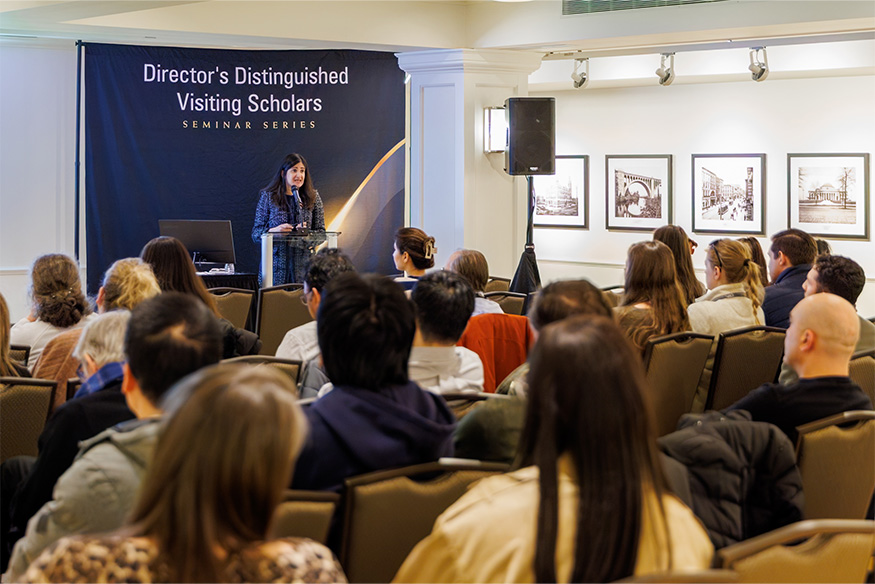 Standing before a room of medical experts and physician-scientists, Reshma Jagsi, M.D., D.Phil, called on her peers to empower their patients by making informed decisions together to optimize and personalize the cancer care that is right for each one of them.
The Valentine museum is situated in the heart of the health sciences campus at VCU, just blocks away from Massey’s clinics and laboratory spaces in downtown Richmond. The museum, with a mission to engage, educate and challenge a wide audience by collecting and interpreting the city’s history, was a fitting location to host the seminar series. Likewise, Jagsi sought to educate and engage with her audience on the importance of collecting and interpreting decades of medical data in an effort to personalize treatment for every patient. These tailored approaches evolve through ongoing scientific discovery and a better understanding of cutting-edge breast cancer care, where success is marked by the “systematic addition of incremental advances.”
The two-day Massey event featured three primary components: a community fireside chat, a student meet-and-greet and a research seminar.
Moderated by Sharon Rivera-Sanchez, an 11-year breast cancer survivor and “thriver” who was treated at Massey, the community fireside chat was geared toward members of the general public who could ask questions, in alignment with the cancer center’s community-driven mission to engage the people it treats in everything it does.
Topics included the incorporation of mental wellness strategies in breast cancer care and radiation oncology, where Jagsi said that individual patient values and preferences are being prioritized, placing “the whole human being that is in that clinical encounter” at the forefront of treatment decisions.
As she talked about the “leaps and bounds” in radiation oncology for breast cancer, she nodded over to the first row at Douglas W. Arthur, M.D., the associate director for clinical affairs and chief of radiation oncology at Massey, acknowledging his direct involvement in transforming the clinical landscape for treating the disease.
“A lot of advancements were pioneered by Dr. Arthur sitting right over there, so that’s pretty cool,” Jagsi said, alluding to a national clinical trial he led that found a second lumpectomy followed by partial breast reirradiation was a viable substitute for a mastectomy.
Additionally, Jagsi championed the need for clinical trials that are representative of all populations in order to fully optimize available treatments for every patient.
“Ignoring all of the information we have available is not the right way to do science,” Jagsi said. “Because of decades of brave women volunteering to let the flip of a coin decide what treatment they receive, we have so much information [to make breast cancer] much more manageable than it ever was before.”
During the second portion of this series, Jagsi spoke with a group of students and trainees in Massey’s Goodwin Research Laboratory. Through this conversation, she fielded questions from students about her interest in breast cancer care and radiation oncology, how she found her career path, and obstacles she overcame to climb to the position she is in today.
Lastly, Jagsi rounded out the series with a scientific presentation at The Valentine, aimed toward an audience of medical professionals and scientists.
She provided an overview of two of her clinical trials that seek to harness information gained from patient-reported outcomes to tailor and manage personalized radiation therapy treatment strategies so patients can feel empowered to make their own choices following a cancer diagnosis.
“Many patients have multiple reasonable options and value information about the impact of different treatments,” Jagsi said. “Patient-centered care requires us to embrace best practices in health communications.”
Written by: Blake Belden
Related News
Research & Innovation
Researchers identify Achilles’ heel in lung cancer through common p53 genetic mutationMar 9, 2026
Community Engagement, Prevention
AGEs research provides dietary guidance while reducing risk of chronic disease and cancerMar 4, 2026

Get access to new, innovative care
Treatments in clinical trials may be more effective or have fewer side effects than the treatments that are currently available. With more than 200 studies for multiple types of cancers and cancer prevention, Massey supports a wide array of clinical trials.
Find a provider
Massey supports hundreds of top cancer specialists serving the needs of our patients. Massey’s medical team provides a wealth of expertise in cancer diagnosis, treatment, prevention and symptom management.