Latest News
Research & Innovation
Massey researchers lead international collaboration of first-ever, multi-platform digital atlas of oral tissues
Mar 23, 2026
Researchers at VCU Massey Comprehensive Cancer Center are leading an international study that advances the understanding of the immunoregulatory nature of human tissues, offering breakthrough insights into how fibroblasts serve as the core regulators of structural immunity in the mouth.
Serving as the cover story in the first-ever issue of Cell Press Blue, Kevin Matthew Byrd, D.D.S., Ph.D., a member of the Cancer Biology research program at Massey and assistant professor of oral and craniofacial molecular biology at the VCU School of Dentistry, and Jinze Liu, Ph.D., a research member at Massey and professor in the Department of Biostatistics at the VCU School of Public Health, show how the findings lay the groundwork for targeted modulation of fibroblast activity in fibrosis, cancer, and autoimmunity.
Byrd and Liu describe how fibroblasts, traditionally viewed as structural support cells, also perform important regulatory roles that may be leveraged to improve health outcomes, including cancer. By targeting shared stromal–immune communication networks across other barrier organs barrier organs in health and chronic disease, new therapeutic strategies may become possible.
 Researchers at VCU Massey Comprehensive Cancer Center are advancing the understanding of the immunoregulatory nature of human tissues
“We think this is actually a really important feature for the rest of life,” Byrd said. “Based on some studies, by 2030, about 30-40% of all human deaths will be linked to fibrosis.”
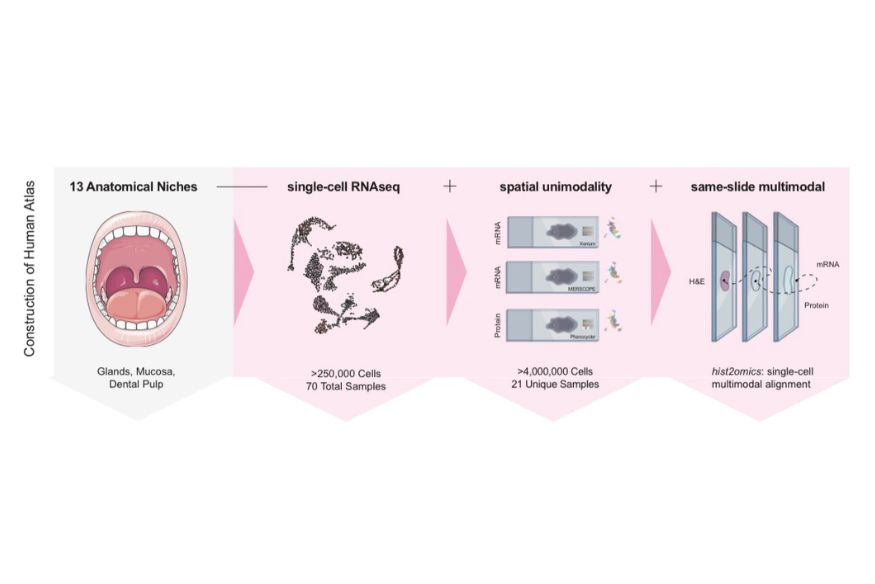
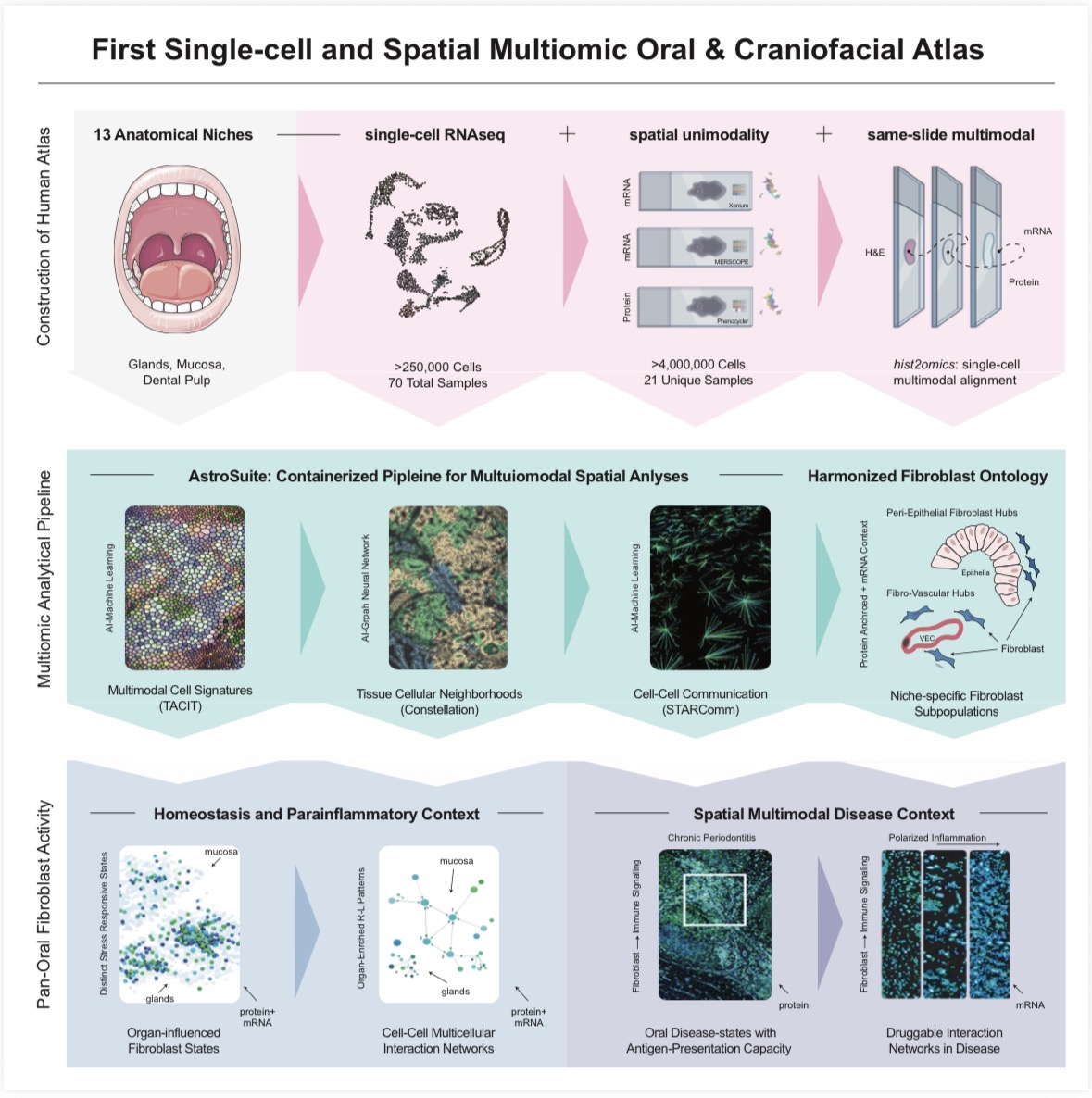
The data contained in the project, a first-of-its-kind, AI-driven atlas, integrates single-cell and dual-platform spatial proteotranscriptomics, allows researchers to look at a first-of-its-kind AI-enabled atlas that integrates single-cell sequencing with dual-platform spatial proteotranscriptomics, allowing researchers to examine the connections between chronic inflammatory diseases, autoimmune diseases and several cancers and multiple cancers to understand if there are whether there may be unique cancer-targeting opportunities.
The publication also introduces AstroSuite, an AI-enabled toolkit providing an interoperable computational framework for integrated single-cell and spatial analysis. AstroSuite underpins the atlas and enables scalable, reproducible spatial biology across tissues and disease contexts. AstroSuite brings together several bioinformatics tools, including TACIT, which Byrd and Liu debuted last year in Nature Communications.
“We started off with this single-cell sequencing approach, but, in parallel, also employed mspatial-multiomic sequencing approaches,” said Byrd. “AstroSuite became an essential technology where we were stacking technologies on top of one another, allowing us to map in distinct clusters in ways that we couldn't see through one technology alone.”
.jpg) Researchers at VCU Massey Comprehensive Cancer Center are advancing the understanding of the immunoregulatory nature of human tissues.
Researchers at VCU Massey Comprehensive Cancer Center are advancing the understanding of the immunoregulatory nature of human tissues.
AstroSuite and related technologies form the backbone of the startup company spun-out from VCU by Byrd and Liu last year.
VCU is serving as the central coordinating site for this international, multi-institutional study alongside Queen Mary University of London, layering in additional tissue samples and research from partners at the University of North Carolina, Duke University, the Wellcome Sanger Institute, Mildred-Scheel Early Career Centre for Cancer Research, University Hospital Würzburg, National Institutes of Dental and Craniofacial Research, University of Pennsylvania, University of Cambridge, and University of Groningen.
For Byrd, the international collaboration serves as a point of pride. “These researchers and universities wanted to be part of the study, as they believed in what we were going to find, and they wanted to utilize the atlas, which we are making publicly available to the scientific community. We want this research to accelerate discovery.
“We’re trying to take the best of multiple worlds, different disciplines, tools and technologies, that are a part of these labs, and hopefully advance science more quickly. We want to see progress, and we know that's not going to happen in one lab alone.”
Written by: Bill Potter
Related News
Research & Innovation, Clinical Care, Prevention
Colorectal Cancer Awareness Month: Q&A with Dr. Khalid MatinMar 18, 2026
Research & Innovation, Clinical Care
VCU Massey Comprehensive Cancer Center Introduces First-In-Market Brachytherapy Brain Tumor SurgeryMar 16, 2026
Research & Innovation, Clinical Care, Community Engagement
Leaps and bounds in radiation oncology: Putting patients at the center of their cancer careMar 10, 2026

Get access to new, innovative care
Treatments in clinical trials may be more effective or have fewer side effects than the treatments that are currently available. With more than 200 studies for multiple types of cancers and cancer prevention, Massey supports a wide array of clinical trials.

Find a provider
Massey supports hundreds of top cancer specialists serving the needs of our patients. Massey’s medical team provides a wealth of expertise in cancer diagnosis, treatment, prevention and symptom management.