
Latest News
Research & Innovation
Novel therapy using engineered immune cells to kill prostate cancer earns $1.8 million Department of Defense grant
Jan 20, 2026
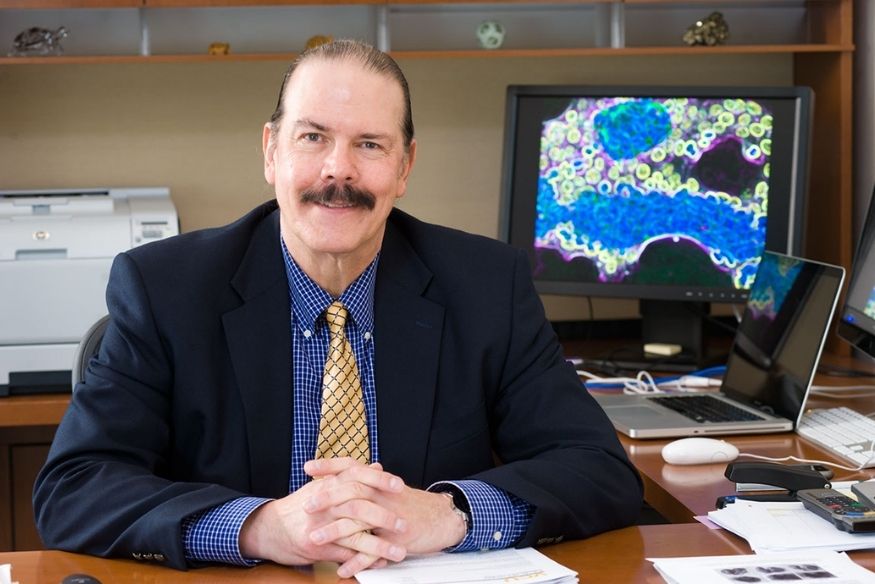
Researchers at VCU Massey Comprehensive Cancer Center and the VCU Institute of Molecular Medicine (VIMM) were recently awarded a $1.8 million, 3-year grant from the United States Department of Defense (DoD) to study the implications of using a modified enhanced therapeutic version of melanoma differentiation associated gene-7/Interleukin-24, IL-24 ‘Superkine’ (IL-24S) delivered by immune (natural killer) cells to fight advanced prostate cancer.
This DoD Grant will allow the investigative teams of Drs. Paul B. Fisher and Swadesh K. Das to take the next step in IL-24S research, which has already shown remarkable efficacy when delivered by a therapeutic adenovirus against brain (glioblastoma) cancers, by delivery through enhanced engineered natural killer (NK) cells. IL-24S is a genetically engineered version of IL-24 that targets and kills cancer cells while sparing normal ones.
The research lab led by Paul B. Fisher, MPh, Ph.D., FNAI, the Thelma Newmeyer Corman Endowed Chair in Cancer Research at Massey, founding director of the VIMM and professor in the Department of Cellular, Molecular and Genetic Medicine, received the grant, which serves as a natural extension of the ‘Superkine’ research conducted by the Fisher and Swadesh K. Das, Ph.D. labs, published in June in the Journal of ImmunoTherapy of Cancer, which demonstrated that IL-24S could be part of a ‘Fusion Superkine’, which combines IL-24S and the immune modulator IL-15 in the same molecule, to target and treat brain cancer.
Early-stage prostate cancer (PC) is generally curable, whereas advanced PC, particularly when it has metastasized to bone, is without an effective therapy. Patients that fail androgen deprivation therapy progress to castration-resistant prostate cancer (CRPC), an incurable cancer. In their PC program, Fisher, his lab, and collaborators are designing reagents and viral- and immune cell-based approaches to remedy this problem, with the ultimate goal of developing a ‘cure’ for CRPC.
In the proposed DoD studies, the investigators will utilize chimeric antigen receptors (CAR), targeting prostate-specific membrane-antigen which is prevalent in PC, to deliver genetically-modified natural killer cells that will produce the IL-24S ‘Superkine’, creating a potential breakthrough therapy for both primary and metastatic prostate cancers. In the case of CRPC, growth continues even when testosterone levels are low and is without an effective therapy.
“An underlying problem with prostate cancer diagnosis and treatment is the absence of a definitive test that will inform a physician if a patient’s PC will remain slow-growing and responsive to therapy, or if it will evolve into an aggressive form, leading to CRPC, with the capacity to metastasize and with no effective therapy,” Fisher said.
Preliminary studies described in the DoD grant application indicate that IL-24S ‘Superkine’-modified NK cells grow better in culture and in vivo in animal models, remain active longer and exhibit increased anti-PC activity. “Initial animal PC modeling studies indicate that autologously delivering IL-24S ‘Superkine’-modified NK cells can effectively treat primary and advanced prostate cancer,” Fisher remarked.
The DoD grant will support two primary aims of Fisher’s research:
- Define the mechanisms by which IL-24S induces NK cell activation and enhances proliferation and survival in the body.
- Determine how IL-24S increases NK cell fitness and anti-tumor activity against CRPC.
“Our innovative ‘cell therapy’ applications of targeting prostate-specific membrane antigens and IL-24S have never been done before,” Fisher reflected. “These applications will hopefully provide an ideal approach to control or eliminate CRPC and bone metastases, and with further studies, they may significantly improve the long-term quality of life in patients with metastatic CRPC.”
Previous research from Fisher and fellow Massey and VIMM researcher, Xiang-Yang (Shawn) Wang, Ph.D., Co-Leader Developmental Therapeutics Program (Massey) and Associate Scientific Director of Immunology (VIMM), disclosed that T cells — immune cells that help fight cancer — can be armed with IL-24 to broadly attack solid tumors and modify the tumor microenvironment to allow more effective immunotherapy of cancer. Further studies are required to determine if IL-24S ‘Superkine’ can convert immunologically ‘cold’ tumors into immunologically ‘hot’ tumors that can respond better to immunotherapy when combined with checkpoint inhibitors and additional chemotherapeutic agents or radiation.
Prostate cancer is the most frequently diagnosed cancer in men and the second leading cause of male death, according to the American Cancer Society. With men representing 80% of active-duty U.S. Service Members, prostate cancer is a significant medical concern for the DoD and society in general. As highlighted, unlike localized prostate cancer, no effective therapies are available for men with CRPC that has metastasized to bone.
Written by: Bill Potter
Related News
Research & Innovation
Neighborhood factors related to financial stress are linked to worse breast cancer outcomes; interventions could improve survivorshipFeb 18, 2026
Research & Innovation, Clinical Care, Community Engagement
Clinical trials: Shaping the standard of cancer care for the countryFeb 9, 2026
Research & Innovation
How a heart medication could unlock a new targeted approach in lymphomaFeb 4, 2026

Get access to new, innovative care
Treatments in clinical trials may be more effective or have fewer side effects than the treatments that are currently available. With more than 200 studies for multiple types of cancers and cancer prevention, Massey supports a wide array of clinical trials.

Find a provider
Massey supports hundreds of top cancer specialists serving the needs of our patients. Massey’s medical team provides a wealth of expertise in cancer diagnosis, treatment, prevention and symptom management.