Latest News
Research & Innovation
October-December 2025: Published research at Massey
Jan 14, 2026
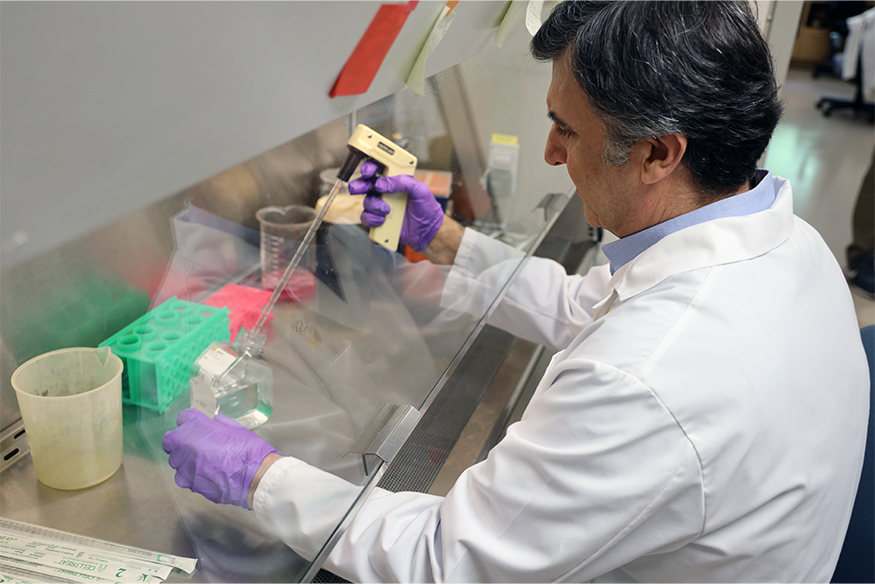
As one of just two NCI-designated Comprehensive Cancer Centers in Virginia, VCU Massey Comprehensive Cancer Center is at the forefront of the nation’s cancer research efforts. Scientists at Massey conduct cutting-edge, laboratory-based basic, population, and clinical and translational-focused research to advance improved approaches to prevent, diagnose and treat cancer. Continue reading to learn more about publications from Massey researchers in October, November and December 2025.
PUBLISHED RESEARCH
Massey scientists discover promising drug combination to overcome resistance in T-cell lymphoma
Massey research members: Steven Grant, M.D., and Said Sebti, Ph.D.
Journal: British Journal of Haematology
Publication date: Oct. 5, 2025
Massey scientists have uncovered a powerful new drug combination that could overcome resistance in T-cell lymphoma, an aggressive and often treatment-resistant form of blood cancer. The study shows that combining an approved class of drugs known as histone deacetylase inhibitors with the investigational compound GGTI-2418 dramatically enhances cancer cell death and reverses drug resistance through suppression of the AKT survival pathway.
VCU collaborators: Xiaoyan Hu, Ph.D., Lin Li, Aslamuzzaman Kazi, Ph.D., Jewel Nkwocha and Hitesh Vasiyani, Ph.D.
Cytosine methylase and hydroxymethylase activity in mammalian mitochondria
Massey research member: Lisa Shock, Ph.D.
Journal: Frontiers in Cell and Developmental Biology
Publication date: Oct. 14, 2025
Scientists recently published a study on the research topic "Beyond Energy Production: Exploring Mitochondrial Dynamics and Disease," demonstrating that endogenously-tagged mtDNMT1 purified from mitochondria exhibits time- and concentration-dependent CpG-specific DNA methyltransferase activity, but it is not working alone: DNMT3b cooperates with mtDNMT1 to methylate mtDNA and regulate mitochondrial transcription.
VCU collaborators: Shirley M. Taylor, Ph.D., Jason M. Robinson and Prashant V. Thakkar, Ph.D.
Scientists find promising therapeutic strategy for glioblastoma
Massey research member: Suyun Huang, M.D., Ph.D.
Journal: Genes & Diseases
Publication date: Oct. 16, 2025
Glioblastoma is an extremely aggressive brain tumor with a poor prognosis. Despite advances in neurosurgery, chemotherapy and radiotherapy, it remains treatment-resistant and inevitably recurs. A team of scientists investigated the efficacy of Wnt-C59, a small molecule Wnt inhibitor, on an experimental glioma model. Their findings demonstrated that targeting the Wnt/β-catenin pathway is a potentially effective avenue for the treatment of GBM.
VCU collaborators: Xiaowei Zhang, Richard Inho Joh, Ph.D., Taohui Ouyang and Brayden Wang
Chemotherapy could overcome drug resistance in multiple myeloma
Massey research members: Senthil Radhakrishnan, Ph.D., and Jinze Liu, Ph.D.
Journal: Molecular Biology of the Cell
Publication date: Oct. 22, 2025
A class of drugs known as proteasome inhibitors are FDA-approved treatment options for multiple myeloma, however, resistance frequently limits their overall effectiveness. Through a new study, Massey research members determined that a type of chemotherapy known as anthracyclines suppress Nrf1, a transcription factor linked to resistance of proteasome inhibitors. These findings suggest that anthracyclines could be part of an effective combination strategy to overcome drug resistance.
VCU collaborators: Bader Albalawi, Ahmed Elshazly, Janakiram Vangala, Madison Ward, Holly Byers, Christiane Carter, M.S., Nayyerehalsadat Hosseini, M.S., and Shanwei Shen, M.D., Ph.D.
Vaccine enhances immune response against tumors and metastases
Massey research members: Shawn Wang, Ph.D., and Masoud Manjili, Ph.D., DVM
Journal: Vaccines
Publication date: Oct. 24, 2025
Preclinical and clinical evidence supports a chaperone-based vaccination platform for cancer immunotherapy, through which antigens are delivered directly to antigen-presenting cells. Using a vaccine already established in a recent clinical trial, a team of scientists demonstrated an enhanced immune response against primary tumors and metastases. The study findings support a promising strategy to potentially improve low response rates in patients receiving immune checkpoint inhibitors.
VCU collaborators: Jinyang Cai, Ph.D., Xueqian Cheng, Zheng Liu, Ph.D., Chunqing Guo, Ph.D., Wenjie Liu, Ph.D., Syed Shah, M.D., and Xiaofei Yu, Ph.D.
Mobile technology addresses barriers to timely cancer care
Massey research members: Robert A. Winn, M.D.
Journal: Journal of Oncology Navigation & Survivorship
Publication date: November 2025
Designed to increase patients’ access to community resources, reduce barriers to completing recommended treatments, and enrich the overall patient experience, the Comprehensive Connected Cancer Care Program—developed by the University of Kentucky Markey Cancer Center as part of the Alliance for Equity in Cancer Care—is introducing a digital cancer navigation platform in the palm of your hand. A recent paper explains how the tool is intended to supplement, not replace, in-person care, enabling patients to take a more active role in their cancer journey while at home and improving communication with support teams between visits.
VCU collaborators: Krista Casazza, Ph.D., RD, Emma Wickland, MPH, CHES, Marcie Wright, Ph.D., and Jennifer Zhu, MS
Intervention strategies needed to reduce opioid use in cancer survivors
Massey research members: Susan Hong, M.D., and Renato Martins, M.D.
Journal: Supportive Care in Cancer
Publication date: Nov. 3, 2025
A new study examined the patterns of opioid prescriptions in disease-free cancer survivors who were at least one year out from completion of their cancer treatment. More than half of patients were prescribed escalating doses of opioids. Since higher opioid doses have been shown to be associated with increased risks of harm, the study suggests that future multicenter studies are needed to examine the factors associated with increasing opioid doses, as well as intervention strategies to mitigate opioid escalation among cancer survivors.
VCU collaborators: Vasco M. Pontinha, Ph.D., Livingstone Aduse-Poku, Ph.D., F. Gerard Moeller, M.D., and Danielle Noreika, M.D.
Researchers study links between environmental burdens and modifiable lifestyle risk factors in cancer survivors
Massey research members: Bernard Fuemmeler, Ph.D., M.P.H., Carrie Miller, Ph.D., M.P.H., and W. Greg Hundley, M.D.
Journal: Annals of Behavioral Medicine
Publication date: Nov. 4, 2025
Cancer survivors are living longer and are uniquely susceptible to developing subsequent chronic conditions. Improving cancer survivorship outcomes is a priority in cancer prevention and control. A new study suggests that environmental burdens contribute to sedentary lifestyles among cancer survivors, emphasizing the need for further research in this area.
VCU collaborators: Joseph Boyle, Ph.D., and Jeremy Barsell, M.S.
Targeted drug could benefit pediatric and young adult patients with invasive soft tissue cancer
Massey research members: Anthony Faber, Ph.D., Senthil Radhakrishnan, Ph.D., Mikhail Dozmorov, Ph.D., Jennifer Koblinski, Ph.D., Masoud Manjili, DVM, Ph.D., Andrew Poklepovic, M.D., and Kristoffer Valerie, Ph.D.
Journal: Nature Communications
Publication date: Nov. 5, 2025
A collaborative research team, led by scientists at Massey and Huntsman Cancer Institute at the University of Utah, has identified a targeted drug that could effectively treat an aggressive soft tissue cancer that occurs most often in pediatric and young adult patients. New findings suggest that blocking a specific genetic pathway could reverse a series of tumor-driving cellular interactions to restore DNA function and benefit patients with synovial sarcoma.
VCU collaborators: Konstantinos Floros, Ph.D., Elsamani Abdelfadiel, Ph.D., Krista Dalton, Ph.D., Carter Fairchild, Ronald Hill Nayyerehalsadat Hosseini, Bin Hu, Ph.D., Asha Jose, Vita Kraskauskiene, Richard Kurupi, Janina Lewis, Ph.D., Madelyn Lorenz, Durga Paudel, Jane Roberts, Shanwei Shen, M.D., Ph.D., Mayuri Shende, M.D., Jamie Slaughter, Angeliki Stamatouli, M.D., Yanli Xing and Kun Zhang, Ph.D.
Targeted therapy overcomes immune suppression in breast cancer
Massey research member: V. Lokesh Battula, Ph.D.
Journal: npj Breast Cancer
Publication date: Nov. 5, 2025
The enzyme known as GD3 synthase (GD3S/ST8SIA1) is highly active in many cancers, including within GD2+ breast cancer stem-like cells in triple-negative breast cancer. Through a new study, a group of scientists demonstrated the role of GD3S in immune regulation and identified a fully humanized anti-GD2 antibody—naxitamab—as a therapeutic tool to target GD3S/GD2+ breast tumors. The findings provide proof-of-concept that naxitamab, with activated immune cells, holds therapeutic potential in treating a subset of breast cancer.
Community-engaged strategy to improve lung cancer screening rates and reduce deaths in high-risk groups could serve as national model
Massey research members: Vanessa B. Sheppard, Ph.D., and Robert A. Winn, M.D.
Journal: Cancers
Publication date: Nov. 11, 2025
People as young as 50–64 who meet the U.S. lung cancer screening guidelines may receive screening, although they will typically not qualify for Medicare coverage for screening. A study team obtained funding from Stand Up To Cancer® to test a new patient navigation strategy to assist Black patients from federally qualified health centers with finding resources to overcome their lung cancer screening barriers. Reported lung cancer screening barriers included cost and insurance issues. This innovative, community-engaged strategy to improve lung cancer screening rates and reduce lung cancer deaths in high-risk people could serve as a national model.
VCU collaborators: Tiffani Collins, M.P.H., Sherrick S. Hill, Neusolia Valmond, M.P.H., Rosuany Vélez Acevedo, Ph.D., and Monique Williams, M.P.H.
Researchers examine the relationship between cognitive function in brain cancer patients and caregiver burden
Massey research members: Sarah Braun, Ph.D., LCP, Autumn Lanoye, Ph.D., and Ashlee Loughan, Ph.D., LCP
Journal: Journal of the International Neuropsychological Society
Publication date: Nov. 26, 2025
For patients with primary malignant brain tumors, cognitive decline is incredibly common and contributes to reduced independence in daily functioning. A group of clinical researchers set out to explore the association between neuro-oncology patients’ cognitive function and caregiver burden. Study findings suggest that leveraging the continued cognitive strengths and implementing individualized cognitive rehabilitation programs for brain cancer patients may help improve caregiver burden.
VCU collaborators: Giuliana Zarrella and Amber Fox
Empowering Latino communities through Colorectal Health Research Champions model
Massey research members: Vanessa B. Sheppard, Ph.D., and Maria Thomson, Ph.D.
Journal: Journal of Immigrant and Minority Health
Publication date: Dec. 4, 2025
Colorectal cancer is the second leading cause of cancer mortality among Latinos who remain underrepresented in screening rates and are more often diagnosed at later stages, leading to poorer outcomes. A team of researchers implemented the Colorectal Health Research Champion model and found that it successfully enhanced colorectal cancer knowledge, screening and early detection awareness among the Latino population, while encouraging consideration of clinical trial participation.
VCU collaborators: Nancy Valencia-Rojas, MSPH, Beomchang Kim, Shiva Salehian, Ph.D., and Katelyn Schifano, MS
New tool could detect and quantify cellular process involved in iron metabolism
Massey research member: Can Senkal, Ph.D.
Journal: Journal of Biological Chemistry
Publication date: Dec. 6, 2025
Iron is an essential element required for biological functions such as oxygen transport, energy generation and DNA synthesis. Ferritinophagy plays an important role in the regulation of iron within cells, but it is also linked to a number of diseases, including cancer. A team of scientists generated an innovative tool that can be used to detect and quantify ferritinophagy in mammals, which could be instrumental in future studies focused on iron metabolism within cells.
VCU collaborators: Sachin K. Kempelingaiah, Grace Mavodza, Ph.D., and Alexandra J. Straus
Fatty acid prevents gastrointestinal toxicity caused by chemotherapy
Massey research members: Hamid Akbarali, Ph.D., David Gewirtz, Ph.D., Hisashi Harada, Ph.D., and Yuesheng Zhang, M.D., Ph.D.
Journal: Scientific Reports
Publication date: Dec. 8, 2025
Chemotherapy-induced gastrointestinal toxicity is a significant dose-limiting complication for cancer treatment. Disruption of certain functions within the gastrointestinal tract caused by chemotherapy can lead to mucositis and diarrhea, among other complications. This study found that the presence of butyrate—a naturally occurring fatty acid in the body—was associated with the prevention of chemotherapy-induced gastrointestinal toxicity.
VCU collaborators: Stanley Cheatham, Naeem Ahmad, Mahshid Arastonejad, Ryan Kane, Natalie Luffman, Zayd Rehman and Katarzyna M. Tyc, Ph.D.
Targeted drug could kill dormant cells and prevent relapse in triple-negative breast cancer
Massey research members: Masoud Manjili, Ph.D., DVM, Harry D. Bear, M.D., Ph.D., and Hisashi Harada, Ph.D.
Journal: British Journal of Cancer
Publication date: Dec. 15, 2025
Chemotherapy-induced tumor dormancy is a significant barrier to curative cancer therapy, particularly in triple-negative breast cancer, where dormant cancer cells evade treatment and then lead to late relapses. A team of researchers identified the protein BCL-XL as a central survival factor in chemotherapy-induced dormancy, and suggest that targeting tumors with a class of drugs known as BCL-XL inhibitors may kill dormant cells and prevent recurrence in high-risk triple-negative breast cancer.
VCU collaborators: Kinjal Gupta, Laura Graham, Michael Idowu, M.D., MPH, Nicholas Koelsch, MS, and Victoria Neely
Proactive cardiovascular screening needed for young cancer survivors
Massey research members: Wendy Bottinor, M.D., Dipankar Bandyopadhyay, Ph.D., Xiaoyan Deng, MS, Madhu Gowda, M.D., and Jennifer Jordan, Ph.D.
Journal: Cancers
Publication date: Dec. 18, 2025
Survivors of childhood, adolescent and young adult-onset cancer (C-AYAs) represent a growing population at an increased risk for cardiovascular disease and mortality. The risk for cardiovascular disease is increased among cancer survivors who were treated with a type of chemotherapy known as anthracyclines. These findings underline the need for proactive screening and management of cardiovascular disease risk factors among C-AYA survivors, beginning at an early age.
VCU collaborators: Ben Bane, Matthew Dean, M.D., OreOluwa Aluko, Adam Aston, M.D., David Chuquin, M.D., Yiwei Hang, Sherin Menachery, M.D., and Ericka Miller
Researchers examine relationship between neighborhood violence and lung cancer risk
Massey research member: Robert A. Winn, M.D.
Journal: Cancer Prevention Research
Publication date: Dec. 22, 2025
Lung cancer is the leading cause of cancer-related death, with higher incidence and mortality rates for Black men than white men. This study explores the impact of living in a high violence neighborhood, which may contribute to elevated lung cancer risk and worse outcomes. Addressing neighborhood-level social stress exposure could help improve lung cancer prevention and intervention.
Paradigm shift in leukemia treatment translates to improved survival
Massey research members: Keri Maher, DO, and Nolan Wages, Ph.D.
Journal: European Journal of Haematology
Publication date: Dec. 23, 2025
Treatment options for newly diagnosed acute myeloid leukemia (AML) have increased in recent years, leading to a paradigm shift toward more targeted and less intensive therapies. Through a retrospective analysis, scientists highlighted a meaningful shift in treatment patterns associated with improved outcomes overall, but found an ongoing lack of progress in the highest-risk subgroups with AML.
VCU collaborators: Thuy Ho, M.D., Hyun Lee, M.D., Li Liu, and Patrick Willard, DO
Targeted strategy could enhance protection against fatty liver disease
Massey research members: Devanand Sarkar, Ph.D., Paul B. Fisher, Ph.D., Jinze Liu, Ph.D., Rebecca K. Martin, Ph.D., and Jolene J. Windle, Ph.D.
Journal: Journal of Biological Chemistry
Publication date: Dec. 23, 2025
The gene AEG-1/MTDH plays an important role in lipid metabolism and inflammation in liver cells, promoting a severe form of fatty liver disease known as metabolic dysfunction-associated steatohepatitis (MASH). This study demonstrates that AEG-1 in myeloid cells regulates gene expression in liver tissue, indicating a major involvement in the regulation of MASH. The study authors suggest that targeting AEG-1 in both liver cells and macrophages might provide added protection against fatty liver disease.
VCU collaborators: Suchismita Raha, Ph.D., Eva Davis, Ph.D., Ali Gawi Ermi, Devon Farrar, Rachel G. Mendoza, Xufeng Qu, MS, and Mark A. Subler, Ph.D.
PUBLISHED REVIEWS
Gene therapy strategies for hepatocellular carcinoma: Current landscape and future directions
Massey research member: Devanand Sarkar, Ph.D.
Journal: Cancers
Publication date: Nov. 7, 2025
Hepatocytes are the main cells in the liver, comprising approximately 90% of all liver cells. The cancer that arises in hepatocytes is known as hepatocellular carcinoma (HCC), accounting for about 80% of all liver cancers. This review provides an overview of the current status of gene therapy in HCC, its promises, success stories, hurdles and challenges.
VCU collaborators: Ali Gawi Ermi, Ph.D., Kayla Rodriguez and Rabha Younis
Epigenetic mechanisms and therapeutic advances in breast cancer
Massey research members: Swadesh K. Das, Ph.D., Paul B. Fisher, M.P.H., Ph.D., and Joseph Landry, Ph.D.
Journal: Advances in Cancer Research
Publication date: Nov. 14, 2025
Breast cancer remains the most frequently diagnosed cancer and a leading cause of cancer-related mortality in women globally. By linking molecular insights to clinical applications, this review emphasizes the promise of epigenetic strategies in advancing personalized treatment for breast cancer patients.
VCU collaborator: Shahid Maqbool Mir, Ph.D.
Interrogating the involvement of autophagy, senescence and the immune system in the actions of sacituzumab govitecan as an anticancer agent
Massey research member: David Gewirtz, Ph.D.
Journal: IMR Press
Publication date: Nov. 27, 2025
Antibody-drug conjugates (ADCs) are an emerging class of cancer therapeutics comprised of a tumor-targeting antibody linked to a cytotoxic payload. This article explores the potential influence of autophagy, senescence, and the patient’s immune system on the treatment response.
VCU collaborators: Melanie Shinanian, Ph.D., Shady Azzam, Eesha Chakraborty, Ahmed Elshazly, and Nada Nassif, M.D.
Sex differences in the response to lung cancer and its relation to programmed cell death protein-1/programmed-death-ligand-1 checkpoint therapies
Massey research member: Joseph Landry, Ph.D.
Journal: Cancers
Publication date: Dec. 10, 2025
Immunotherapies have revolutionized lung cancer treatment. The most widely used immunotherapy has been those that target the programmed cell death protein-1/programmed death-ligand-1 (PD-1/PD-L1) checkpoint therapies. In this review, we summarize evidence in the literature of a possible sex-specific small molecule-driven mechanism underlying sex differences, which could have relevance to the observed sex differences in PD-1/PD-L1 therapy activity in the clinic.
VCU collaborators: Morgan Puglisi, Thusna Gardiyehewa and Lauren May, Ph.D.
Effective smoking cessation interventions in people with cancer
Massey research members: Susan Hong, M.D., and Oxana Palesh, M.D., Ph.D.
Journal: Tobacco Prevention and Cessation
Publication date: Dec. 19, 2025
Continued smoking increases the risk of all-cause and cancer-specific mortality and adversely affects treatment outcomes. This systematic review and meta-analysis of randomized controlled trials evaluated the effectiveness of smoking cessation interventions in individuals diagnosed with cancer.
VCU collaborators: Livingstone Aduse-Poku, Ph.D., and Hui Cheng, Ph.D.
Written by: Blake Belden
Related News
Research & Innovation
Neighborhood factors related to financial stress are linked to worse breast cancer outcomes; interventions could improve survivorshipFeb 18, 2026
Research & Innovation, Clinical Care, Community Engagement
Clinical trials: Shaping the standard of cancer care for the countryFeb 9, 2026
Research & Innovation
How a heart medication could unlock a new targeted approach in lymphomaFeb 4, 2026

Get access to new, innovative care
Treatments in clinical trials may be more effective or have fewer side effects than the treatments that are currently available. With more than 200 studies for multiple types of cancers and cancer prevention, Massey supports a wide array of clinical trials.

Find a provider
Massey supports hundreds of top cancer specialists serving the needs of our patients. Massey’s medical team provides a wealth of expertise in cancer diagnosis, treatment, prevention and symptom management.