Arpine Rostomyan
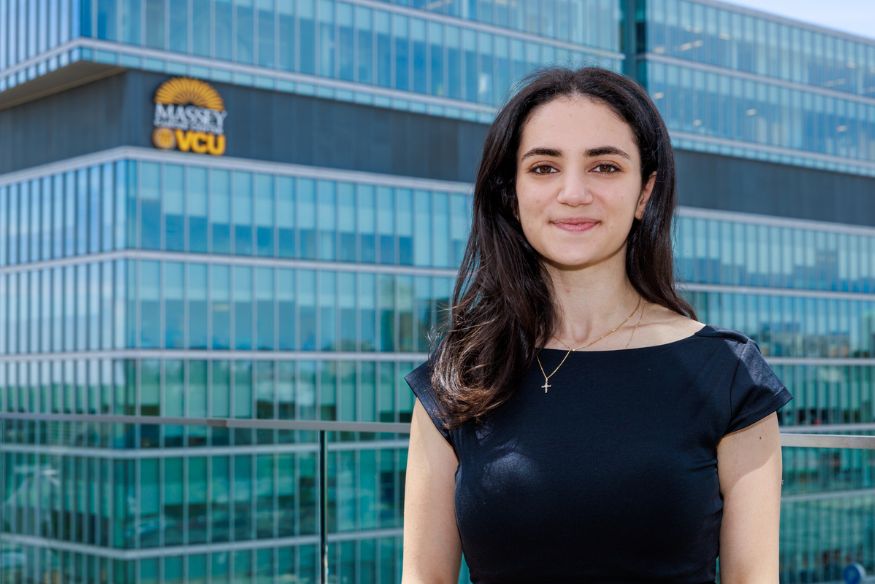
Arpine Rostomyan is a medical student at Virginia Commonwealth University School of Medicine. Originally from Glendale, California, she earned her bachelor’s degree in biology, magna cum laude, from the University of California, Los Angeles. Before medical school, Arpine served as a COPE Health Scholar at Adventist Health Glendale and worked as a medical assistant in a surgical practice. She also contributed to research validating automated measurements for strabismus and developing therapeutic glasses intended to provide a more accessible treatment option.
Arpine’s interest in hematology-oncology began during her first-year medical school course, where she became fascinated by the pathophysiology and molecular mechanisms underlying hematologic disorders. Experiences with family members affected by cancer further motivated her to pursue research focused on difficult-to-treat malignancies. She is particularly interested in translational research that identifies therapeutic vulnerabilities and expands treatment options for patients with resistant cancers. Outside of her academic work, Arpine remains involved in community service and education. She tutors students through the Immigrant and Refugee Tutoring Program at Third Church, assists with health screenings and education at community health fairs, and helps prepare and distribute meals to unhoused members of the Richmond community through the St. Peter Church Community Outreach Program. Through these experiences, she hopes to continue combining scientific discovery with patient advocacy, education, and service.
As a Victoria Searls Traylor Fellow in the laboratory of Gordon D. Ginder, M.D., Arpine investigated the mechanisms of cell death following depletion of CHD4 in TP53-mutant T-cell acute lymphoblastic leukemia. CHD4 is a core component of the nucleosome remodeling and deacetylase complex and supports leukemia-cell survival, proliferation, colony-forming capacity, and resistance to genotoxic stress. Arpine examined whether cell death following CHD4 depletion is mediated through DNA-damage signaling and BAX- and BAK-dependent mitochondrial apoptosis. Using lentiviral shRNA, T-ALL cell models, BAX- and BAK-deficient cells, and ATM inhibition, she evaluated cellular survival, protein expression, proliferation, and colony-forming ability. This work may help clarify whether CHD4 and its related pathways could serve as therapeutic targets in treatment-resistant T-ALL.
Arpine is honored and grateful to have been selected for the Victoria Searls Traylor Fellowship for Research and Innovation in Hematological and Infectious Diseases. She would like to express her sincere appreciation to Dr. Ginder and the members of his laboratory for their generous mentorship, patience, and commitment to her growth as a student researcher. Dr. Ginder’s dedication to scientific discovery, translational research, and the development of future physician-scientists has been a meaningful source of inspiration throughout this experience. Arpine is also deeply grateful to Mr. and Mrs. Kohlbeck for establishing the fellowship in recognition of his mother and for providing students with the opportunity to participate in research aimed at improving outcomes for patients with hematological and infectious diseases.