Latest News
Clinical Care, Prevention
Esophageal cancer: What you should know about risk factors, treatment and clinical trials
Apr 21, 2026
Esophageal cancer makes up about 1% of all cancers diagnosed in the U.S., with the American Cancer Society estimating just over 22,000 new diagnoses in 2026.
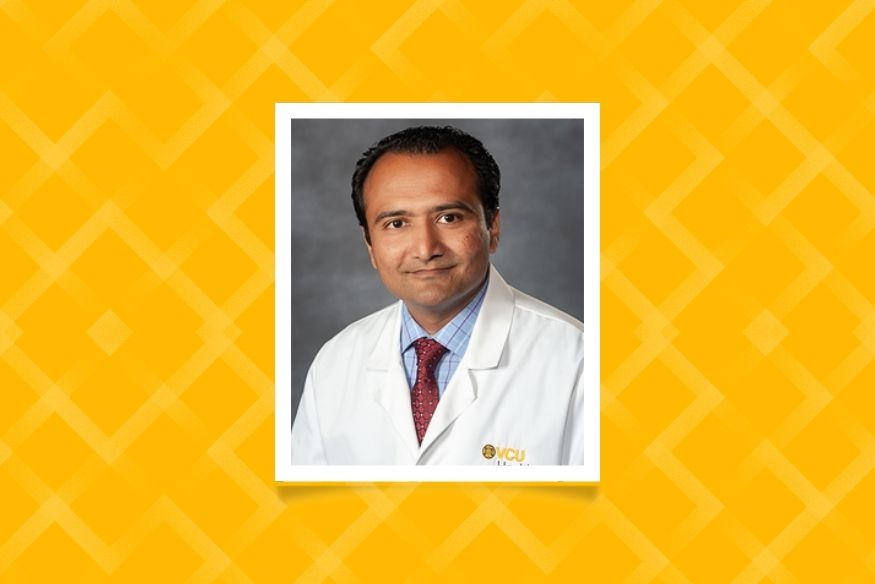
Rachit D. Shah, M.D., the chief of thoracic and foregut surgery at VCU Massey Comprehensive Cancer Center and VCU Health, specializes in the surgical treatment of esophageal, lung and mediastinal tumors.
After completing his cardiothoracic fellowship at the University of Pittsburgh where he fell in love with this specialty, Shah completed additional training in minimally invasive thoracic surgery and thoracic oncology in Pittsburgh and at Duke University. Shah was recruited to VCU to develop and build a thoracic oncology program, through which he has been performing minimally invasive surgeries for 15 years. Every day sparks a new challenge for Shah to do better for his patients.
For Esophageal Cancer Awareness Month, we spoke with Shah about esophageal cancer, risk factors, available treatment options, clinical trials and more.
What is esophageal cancer?
All esophageal tumors start within the innermost lining of the esophagus called the mucosa. Over time, they grow thick and deeper through the layers of the esophagus. If it happens in the lower esophagus, it’s usually adenocarcinoma. If it happens in the upper or middle esophagus, it’s more commonly squamous cell carcinoma.
Are there any risk factors?
The biggest risk factors for adenocarcinoma are obesity and acid reflux. Smoking and alcohol use are significant factors for both adenocarcinoma and squamous cell carcinoma.
What are the symptoms of esophageal cancer?
As the tumor grows, the most common symptom is that it impedes the flow of food from your mouth into the stomach. You may feel the food is hanging up in the chest before making it down into the stomach. You will often have dysphagia, which is trouble swallowing. Usually, it will happen with solid food. And then slowly, this will happen with liquids as well. If this occurs on a regular basis for more than two weeks, you should consult with your health care provider.
Unexplained weight loss is a second common symptom of esophageal cancer.
Are there any screenings?
There aren’t any particular screenings for esophageal cancer, but if you are diagnosed with Barrett’s esophagus, then there are screening protocols to monitor before it turns into adenocarcinoma.
What treatment options are available?
It depends on the stage of your cancer. When you get a diagnosis, it is usually done through an endoscopy and a biopsy. The next step is to get a PET scan. Based on this scan, the size of the tumor and an endoscopic ultrasound, treatment is designed.
If the tumor is within the first two layers of the esophagus—the tumor is caught at a very early stage— then we can remove it from inside endoscopically, and then ablate or freeze the surrounding area. That should help eradicate disease. The downside of that is you have to then get periodic endoscopies for years to keep a close eye on things.
If the tumor is limited to the second or third layer, where it does not involve lymph nodes and it’s not too deep, then ideal treatment is straight to surgery.
If it is already a decent-sized lesion with involvement of the lymph nodes, then the standard treatment is chemotherapy and immunotherapy before surgery. In select cases, chemotherapy and immunotherapy will be given after surgery as well. For a similar stage squamous cell carcinoma, treatment usually involves chemotherapy and radiation followed by surgery. More immunotherapy options are becoming available for patients with persistent cancer after all their treatment, allowing patients to live longer with good control of their disease.
Massey offers robotic surgery to treat this disease and is a high-volume center for esophageal cancer surgery, with robust protocols for patient care before and after surgery. Nationally, few cancer centers offer these treatment options.
Are there common side effects of treatment for esophageal cancer?
Chemotherapy and immunotherapy often lead to fatigue, nausea and loss of appetite. In some patients, we’ll place a temporary feeding tube to allow them to get adequate nutrition while they’re getting through chemotherapy, immunotherapy or radiation.
What can I expect with surgery?
There is a significant adjustment in life that is required. Prior to surgery, we very strongly advocate for patients, if they are people who smoke or consume alcohol, that they need to stop completely and right away so their body can heal while the other treatments are ongoing. Daily walking regimens and exercise are important to build stamina for the long haul of a potential surgery and further treatment.
Immediately after surgery, patients will undergo breathing exercises, physical therapy, occupational therapy and respiratory therapy for their lung hygiene. You want to have surgery at a time when family and friends can be around and give you a hand for a few weeks afterward. During that time, you will have a lot of follow-up visits to get your drainage tubes and feeding tubes removed.
Nutritionists will help patients to restart their diet. You can still eat all the foods that you want, but you have to eat them in smaller quantities and slowly because digestion is also slow. Your bowels may also take a few weeks to adjust. Early on, you may experience some loose bowels, but that solidifies over time. In the long run, the biggest thing is you will be eating smaller meals and eating 4-5 times a day.
What are the benefits of multidisciplinary care?
The biggest thing that Massey offers patients is its multidisciplinary approach to treatment. Our radiation oncologists, medical oncologists and thoracic surgeons all do a lot of it together.
Esophageal cancer is a serious disease. It requires a lot of care. It’s going to take several sessions of meetings and tests with different providers to determine a comprehensive treatment plan. At the same time, patients may have other diseases or conditions that may prohibit them from getting one treatment or another. It’s very important that, as providers from different specialties, we can all look at this comprehensively to determine the best treatment plan for every patient.
Another aspect is nutrition. At Massey, we have dietitians who specifically treat this condition with nutritional support before, during and after treatment. As you go through treatment, your calorie needs change. After surgery, diet and lifestyle changes significantly, so you need experts to help patients manage that as well.
There are also pulmonologists and cardiologists who sometimes manage patients’ other health conditions during cancer treatment, so it’s beneficial to receive care at a center that combines all of these resources, as opposed to individual expertise.
Are there clinical trials available at Massey?
Yes. There are multiple clinical trials available testing new detection or treatments for esophageal cancer patients based on the stage and type of disease.
Are there any common misconceptions with esophageal cancer?
I think the biggest misconception is consulting “Dr. Google” and looking things up online. Care is individualized for every patient, so you shouldn’t focus on what a search engine says.
A second misconception is related to long-term prognosis. With advanced chemotherapy, immunotherapy and improved surgical outcomes, 50-70% of patients are reaching a cure, which previously was only 15-30%.
The last misconception is that you can never live a normal life after surgery. It’s an adjusted life, but you can still have a good quality of life, as long as you manage your diet and lifestyle around it. You can still go out with your family and friends, go on a cruise, travel far away, attend weddings and eat in public. You just have to listen to your body.
Learn more about esophageal cancer and available treatment options today.
Written by: Blake Belden
Related News
Research & Innovation, Clinical Care, Prevention , Leadership
International community gathers for 2026 Global Cardio-Oncology Summit in WilliamsburgOct 14, 2026

Get access to new, innovative care
Treatments in clinical trials may be more effective or have fewer side effects than the treatments that are currently available. With more than 200 studies for multiple types of cancers and cancer prevention, Massey supports a wide array of clinical trials.

Find a provider
Massey supports hundreds of top cancer specialists serving the needs of our patients. Massey’s medical team provides a wealth of expertise in cancer diagnosis, treatment, prevention and symptom management.