Latest News
Research & Innovation
Massey puts community first during annual Walter Lawrence Research Retreat
Nov 24, 2026
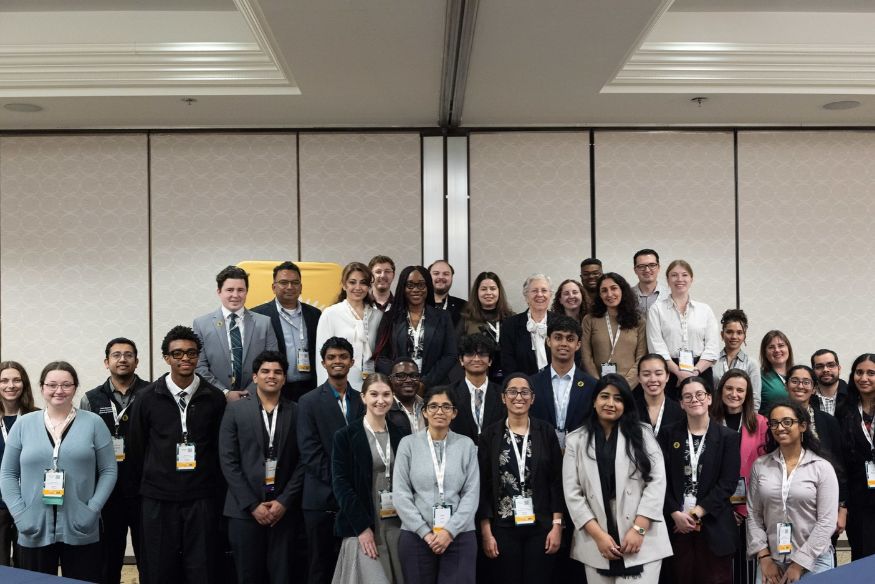
VCU Massey Comprehensive Cancer Center hosted its annual Walter Lawrence, Jr., M.D., Research Retreat on Nov. 12-13, providing an opportunity for clinicians, researchers, students, trainees and community members to hear directly from and interact with Massey experts about new research findings and developments.
Monica L. Baskin, Ph.D., FSBM, FABMR, director and Jeanette and Eric Lipman Chair in Oncology and senior associate dean for cancer innovation in the VCU School of Medicine, welcomed the attendees and reflected on how the retreat was one of the first events she participated in after joining Massey.
“It is wonderful to see many of you this afternoon,” Baskin opened. “We are extremely lucky to bring together such a strong bench of people who are committed to cancer research and improve the outcomes for cancer patients across our commonwealth, country and world. Being a comprehensive cancer center means bringing together scientific expertise, lived experiences and the communities that we serve.”
In one of the highlights of the retreat, students presented 87 research posters, reflecting Massey’s commitment to building the next generation of cancer researchers and doctors.
Community is the center of our center
Arnethea Sutton, Ph.D., a member of the Cancer Prevention and Control (CPC) research program at Massey, reviewed Massey’s catchment area, which covers 66 localities in central, eastern and southern Virginia served by the cancer center, covering over 4 million state residents.
Sutton went over how Massey’s Community Outreach and Engagement (COE) team provides Catchment Area Data Analytics information to the communities it serves as part of its education and engagement efforts — a key to Massey obtaining its NCI comprehensive designation.
Massey works with community partners to share the work being done at the cancer center and to increase cancer screenings and early detection. This includes COE’s involvement in the Vanguard Study, in which the team went directly into communities to encourage enrollments in the national study, which is evaluating a new type of blood test that screens for several types of cancer in their earliest, most treatable stages.
Beyond the lab: Making research accessible
Moderated by Jessica LaRose, Ph.D., FSBM, the Theresa A. Thomas Memorial Foundation Chair in Cancer Prevention and Control, member of Massey’s CPC research program and professor and chair of the Department of Social and Behavioral Sciences in the VCU School of Public Health, the first panel of the retreat focused on ways to better articulate the research being conducted at Massey within the communities it serves and how to break down barriers that often prevent patients from participating in research opportunities.
Regina Hall, a 23-year breast cancer survivor and Massey community advocate, touched on the importance of events like this retreat that allow her to go back to her community and speak about the work being done at Massey. Hall remarked how virtual outreach events allow for greater connection and increased communication across different communities.
“We have to make our research and information more than just transactional,” said Jennifer Koblinski, Ph.D., member of the Cancer Biology research program and director of the Cancer Mouse Models Core at Massey and interim executive director for research infrastructure at VCU. “Dr. [Kim] Rhoads is always reminding us of that, and so by finding unique ways to talk about our research, like we did with our Brushstrokes of Discovery mural, we can speak directly to people in our communities and engage them in what we are doing.”
Koblinski and Chloé Jones, Ph.D., a postdoctoral fellow, acknowledged the need for transparency in speaking with community members, discussing both successes and setbacks in research, as well as recognizing that distrust can exist among community members because of previous failures to follow research protocols.
In discussing the impact of clinical trials and potential reticence of cancer patients to be involved, Hall recounted her own experience in 2003 and the transparency of her doctors. Hall noted that her team of doctors told her that while the clinical trial might not directly impact her cancer care and outcome, it would help future breast cancer patients, information that motivated her to join the trial.
Kicking off day two with visionary leadership
Baskin began day two of the retreat on an optimistic note, highlighting the vast population that Massey serves and the new grants that team members secured this year.
“Diversifying that funding is the way to go,” Baskin said, regarding key strategies to strengthen research and continue making strides in cancer prevention and treatment.
Oncologist Patricia LoRusso, D.O., former president of the American Association for Cancer Research (AACR), associate director of innovative medicine and Amy and Joseph Perella Professor of Medicine at Yale School of Medicine, delivered the Frank D. Pendleton Memorial Lecture to start off the day’s presentations.
In her lecture, LoRusso shared how she and her research team are working to unlock the power of antibody-drug conjugates (ADCs) to revolutionize the way we treat cancer. In her study, she explored potential biomarkers predicting the efficacy and toxicities of approved ADCs, how to detect them and address cancers’ potential resistance to these medicines.
She found that the use of ADCs in clinical trials uncovered different responses across tumor types and side effects that need to be mitigated to improve patient safety. Moving forward, she hopes to find new strategies to overcome resistance, build better ADC molecules and identify smarter antibodies.
“We can move toward a personalized medicine approach with antibody-drug conjugates,” LoRusso said. “If we understand the biology of the disease…we can begin to make that difference.”
Industry-academic partnerships
Andrew Poklepovic, M.D., associate director of clinical research at Massey; Magdalena Morgan, Ph.D., director of licensing at VCU TechTransfer and Ventures; Thomas McCarter, COO at Interleukin Combinatorial Therapies; and Alex Ratti, co-founder and CEO at Light Switch Bio; came together for a discussion on industry-academic partnerships, bringing expertise across clinical research, technology transfer and biotech innovation.
Morgan encouraged researchers to reach out to her to help ensure they protect their intellectual property and get matched with an entrepreneur who can tackle the business aspect of their work.
“We actually don’t want our researchers to run companies, we want them to stay in the lab,” Morgan said.
Building successful team science
Heidi Sankala, Ph.D., scientific writing manager at Massey; Bernard Fuemmeler, Ph.D., MPH, associate director for population sciences and the Gordon D. Ginder, M.D., Chair in Cancer Research at Massey; Devanand Sarkar, Ph.D., associate director for research training and education who holds the Harrison Foundation Distinguished Professorship in Cancer Research at Massey; Jose Trevino, M.D., FACS, the Geoffrey R. Shudtz Chair in Pancreatic Cancer Research and surgeon-in-chief at Massey; and Tonja Ancrum, a three-time, 33-year cancer survivor; gathered for a discussion filled with rich insights about practical strategies for building interdisciplinary teams, engaging community partners, leveraging institutional resources and developing competitive grant proposals.
The group highlighted the importance of fostering the leadership potential of every member of a research team, particularly students and budding scientists.
“Students are a strong spoke in a wheel that allows us to grow,” Trevino said.
Connecting the cores
Koblinski spotlighted a project from the 2026 Executive Leadership Academy for Cancer Centers cohort focused on connecting shared resources across Massey. Her presentation highlighted how collaborating across the cores at Massey can help researchers streamline efforts, maximize their impact, strengthen grant applications and accelerate scientific innovation.
She encouraged members to use the Shared Resource Navigator, which was built to help researchers access shared resources at Massey.
Training the next generation of researchers
Caroline Blair, manager of the Cancer Research Training and Education Coordination (CRTEC) program at Massey, showcased student programs available through the cancer center. With offerings ranging from high school to pre- and post-doctoral programs, she emphasized the importance of strong partnerships with trainees, mentors, staff, advisory committees, institutional partners and funding organizations to help advance the next generation of cancer researchers and healthcare professionals.
Blair’s presentation was followed by talks from three students who participated in Massey’s CRTEC programs—Dustin Bastaich, Ph.D., Vi Chau, and Madeline Gunawardena—who highlighted the research they conducted alongside their mentors.
AI in research and clinical practice
Jinze Liu, Ph.D., director of the bioinformatics shared resource at Massey; Nan Xi, Ph.D., assistant professor of computer science at VCU; and Christine Holzem, cancer survivor and community advocate, led a panel on the role of artificial intelligence in the future of cancer care and scientific discovery. Their discussion tackled topics such as data readiness, infrastructure and interdisciplinary collaboration, and explored the ethical considerations that accompany AI implementation in oncology.
Xi emphasized the importance of ensuring that humans remain a part of the process as AI use continues to grow. “As human beings we need to regard AI as a tool, not an oracle,” he said. “The final decision making has to be made by a human, not AI.”
A whole-person approach to survivorship
Susan Hong, M.D., director of Cancer Survivorship at Massey; Hui Cheng, Ph.D., senior research scientist at Massey; Barry Moore, prostate cancer survivor and president and CEO of the Better Business Bureau serving Central Virginia; Kristin Harris, M.Ed., breast cancer survivor, founder and CEO of Cancer Retreat Centers; and Melissa Earley, B.S.N., R.N., C.C.E.M.T.P., breast cancer survivor and clinical instructor with VCU’s Center for Trauma and Critical Care Education, wrapped the retreat’s panels by focusing on the critical challenges and opportunities in cancer survivorship science. Together, they explored how investigators can enhance survivorship science through interdisciplinary collaboration and translational discovery to address treatment toxicities, strengthen prevention and supportive care, and improve quality of life for cancer survivors.
“It’s not just one organ system of cancer, it affects your entire body, your whole life,” Hong said, speaking to the comprehensive approach needed to care for someone’s wellbeing.
Massey celebrates its own
Throughout the retreat, Massey celebrated its own with several individual awards, which recognized the numerous achievements and contributions of its members –
- Team Massey Award: Vanguard recruitment team – Alexander Krist, M.D., MPH; Patrick Nana-Sinkam, M.D.; Kendra Rowe; Gabriela Villalobos; Kyra Hill; Andy Afrifa; Steve Butler; Rev. Rachel Pierce; Katelyn Schifano; Chickahominy Baptist Association; New Deliverance Evangelistic Church; Anointed New Life Baptist Church; Second Baptist Church; Mount Tabor Baptist Church
- Most Valuable Academic Professional of the Year: Michael Gesme, M.P.A., program manager, Massey Office of Community Outreach and Engagement; Caroline Blair, manager, Massey Cancer Research Training and Education Coordination (CRTEC) program
- Community Advocate of the Year: Mary Simmons, Massey Cancer Champion
- Early Career Investigator of the Year: Emily Kinsey, M.D.
- Clinicians of the Year: Khalid Matin, M.D.
- CSL Most Valuable Clinical Professional: Casey Howell, F.N.P.
- Scientist of the Year: Nolan Wages, Ph.D.
- Lifetime Achievement Award: Kevin Brigle, Ph.D., A.N.P.
Of the 87 presented posters, eight were recognized across three categories for their scientific merit, cancer impact, clarity, and presentation:
Cancer Biology
- Sarita Giri, Ph.D. (Mentor: Iain Morgan, Ph.D.)
- Natalie Luffman (Mentor: Hisashi Harada, Ph.D.)
- Shaughn Rittenhouse (Mentor: Larisa Litovchick, M.D., Ph.D.)
Cancer Prevention & Control
- Akil Badvel (Mentor: Victoria Findlay, Ph.D.)
- Fariha Imtiaz, Ph.D. (Mentor: David Turner, Ph.D.)
- Tuong Vi Nguyen (Mentor: David Turner, Ph.D.)
Developmental Therapeutics
- Olaoluwa Dinakin (Mentor: Ruchi Desai, M.D.)
- Melanie Sinanian, Ph.D. (Mentor: David Gewirtz, Ph.D.)
The research retreat is named after the late Walter Lawrence, Jr., M.D., Massey’s founding director and a national leader in the field of surgical oncology. Lawrence laid the foundation for Massey’s mission of excellence in cancer care, research and education, and led efforts to secure the center’s initial designation from the National Cancer Institute in 1975.
Written by: Bill Potter and Tatiana Del Valle
Related News
Research & Innovation, Prevention
VCU Massey Comprehensive Cancer Center researchers showcase new mechanism to target glucosylceramide synthase in cancer therapyNov 9, 2026
Research & Innovation, Clinical Care
Massey becomes first academic cancer center in Virginia to offer hepatic artery infusion pump therapyNov 5, 2026
Research & Innovation, Community Engagement
Massey fellow studies pancreatic cancer and brings science to the communityNov 4, 2026

Get access to new, innovative care
Treatments in clinical trials may be more effective or have fewer side effects than the treatments that are currently available. With more than 200 studies for multiple types of cancers and cancer prevention, Massey supports a wide array of clinical trials.
Find a provider
Massey supports hundreds of top cancer specialists serving the needs of our patients. Massey’s medical team provides a wealth of expertise in cancer diagnosis, treatment, prevention and symptom management.