Latest News
Research & Innovation
New AI-powered platform helps researchers find promising cancer therapies faster
Jul 1, 2026
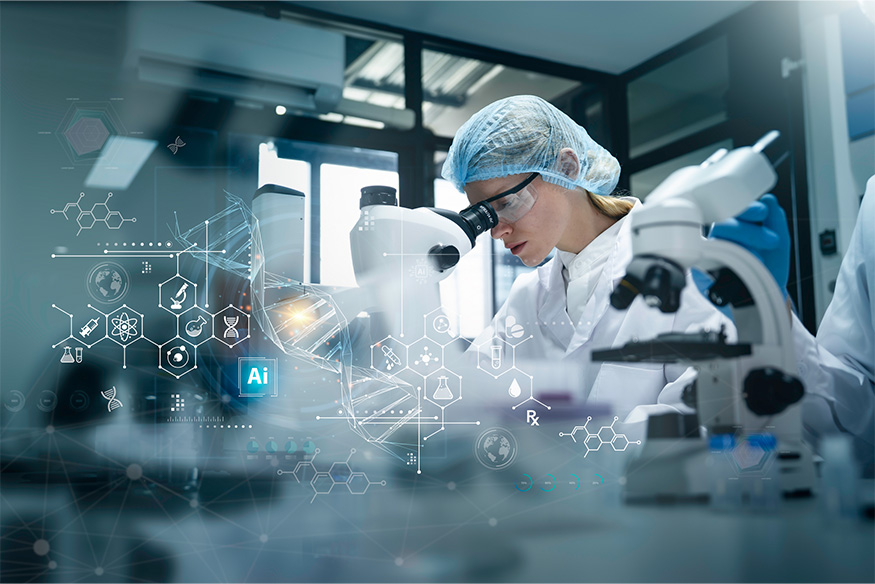
A collaborative team of scientists from nationally prominent institutions—VCU Massey Comprehensive Cancer Center, UCLA Health Jonsson Comprehensive Cancer Center and the University of Colorado School of Medicine—have developed a new platform that combines 3D bioprinting, advanced imaging and artificial intelligence to better monitor how cancer responds to treatment. The technology could help researchers identify promising cancer therapies more rapidly and provide a way to test treatments on a patient's own tumor cells, helping guide more personalized treatment decisions.
Described in Nature Protocols, the approach uses cancer cells from patients to create tiny, lab-grown replicas of tumors, known as organoids, and continuously tracks their response to different drugs. Artificial intelligence then analyzes the resulting data, helping scientists evaluate hundreds of potential therapies simultaneously to uncover patterns in drug responses that could inform treatment strategies for cancers with few effective options.
“This work will enable the drug development community to adopt the technology and more rapidly improve patient outcomes. Ultimately, this serves as a compelling example of the public return on investment for government research funding in biomedicine,” said study co-author Jason Reed, Ph.D., a scientist at VCU Massey and professor in the Department of Physics at the College of Humanities and Sciences.
Reed’s team at VCU created the novel, real-time drug response screening instrumentation, which the UCLA team integrated with their organoid printing approach to demonstrate a powerful new method for personalized therapy selection.
“This work is the product of a synergistic partnership between two NCI-designated Comprehensive Cancer Centers, with support from VCU’s Wright Center for Clinical and Translational Research,” Reed added.
Why it matters
Tumor organoids have become powerful tools for cancer research because they more closely resemble patient tumors than traditional laboratory models. However, many current systems still struggle to combine biological accuracy with the speed, consistency and scale needed for larger studies or clinical use. This study addresses that challenge by creating a platform that can generate and analyze large numbers of patient-derived tumor organoids while capturing detailed information about how they respond to treatment.
What the study did
The researchers developed a unified workflow that uses extrusion bioprinting to generate three-dimensional tumor organoids embedded in extracellular matrix constructs designed for high-throughput multiwell formats. These organoids were then continuously monitored using high-speed, label-free quantitative phase imaging, which tracks changes in biomass and growth dynamics to measure tumor fitness over time. The approach does not require dyes or destructive assays, which can alter cell behavior and limit how long cells can be observed.
To analyze the resulting datasets, the platform incorporates automated image reconstruction, deep learning-based segmentation, and machine learning-based tracking of individual organoid responses to therapy. This allows researchers to quantify drug responses at single-organoid resolution across thousands of samples, providing a detailed view of tumor heterogeneity and differences in how tumors respond to therapy.
What they found
The platform successfully measured how tumor organoids responded to drug treatment over time, both in established cancer cell lines and in a patient-derived tumor sample. Advanced imaging allowed researchers to continuously monitor organoid growth changes in response to a range of drugs, while artificial intelligence helped analyze large amounts of data and track responses at the level of individual organoids.
“Instead of asking whether a drug works on average for a large number of tumor cells, we can now determine which specific organoids respond and which do not, and, ultimately, have an approach to determine the underlying reasons for unique response profiles,” said Michael Teitell, M.D., Ph.D., director of the UCLA Health Jonsson Comprehensive Cancer Center and co-senior author of the study. “This allows us to measure drug responses across thousands of individual organoids, detect rare resistant tumor populations, track growth and treatment responses over time, and better predict which therapies may work for a particular patient.”
What this means for patients
The technology points to a potential approach in which doctors could test cancer drugs on a patient’s own tumor cells before treatment begins. By helping researchers identify which therapies are most likely to work for a particular tumor, the method could support more personalized treatment decisions, particularly for patients with rare and hard-to-treat cancers.
Collaborators
- Additional VCU collaborators: Daniel C. Guest, MS, and Graeme F. Murray, M.D., Ph.D.
- Investigators at UCLA Health Jonsson Comprehensive Cancer Center and the University of Colorado School of Medicine
This research was funded by:
- Air Force Office of Scientific Research
- Department of Defense
- National Cancer Institute
- National Institutes of Health
- National Science Foundation
- UCLA
- VCU Wright Center for Clinical and Translational Research
This was repurposed from a press release originally published by UCLA Health.
Related News
Research & Innovation, Clinical Care, Prevention , Leadership
International community gathers for 2026 Global Cardio-Oncology Summit in WilliamsburgOct 14, 2026
Research & Innovation
Simulating cellular environments to fight advanced prostate cancerOct 7, 2026

Get access to new, innovative care
Treatments in clinical trials may be more effective or have fewer side effects than the treatments that are currently available. With more than 200 studies for multiple types of cancers and cancer prevention, Massey supports a wide array of clinical trials.
Find a provider
Massey supports hundreds of top cancer specialists serving the needs of our patients. Massey’s medical team provides a wealth of expertise in cancer diagnosis, treatment, prevention and symptom management.