Latest News
Research & Innovation, Clinical Care
Massey doctors discuss new pancreatic cancer drug that doubles survival in advanced disease
Jun 23, 2026
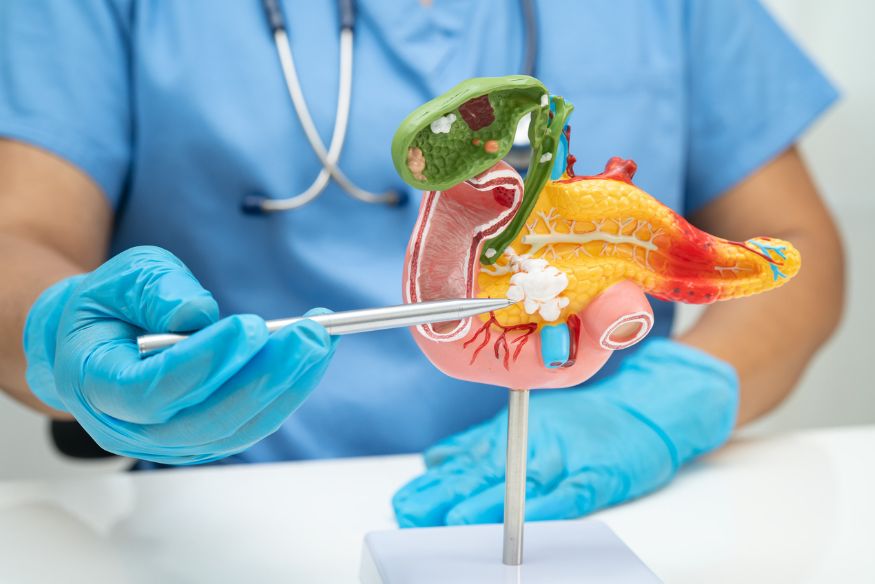
Landmark findings from a phase 3 clinical trial (RASolute 302) indicate that an experimental drug—daraxonrasib—nearly doubled survival in advanced stage pancreatic cancer patients, with fewer side effects reported than chemotherapy. Presented during the 2026 American Society of Clinical Oncology (ASCO) Annual Meeting in Chicago, the findings have caught the attention of national scientists and physicians, many of whom have praised the study as a potentially practice-transforming discovery.
About 67,000 people will be diagnosed with pancreatic cancer in the United States in 2026. Although it accounts for approximately 3% of all cancers in the U.S., it is the fourth leading cause of cancer deaths, according to the American Cancer Society.
We spoke with multiple clinical experts at VCU Massey Comprehensive Cancer Center, who though they were not directly involved in the research, can teach us about these findings and the potential implications for the future of pancreatic cancer treatment.
The experts:
- Ricardo Bello, M.D., MPH: surgical oncologist
- Khalid Matin, M.D.: medical oncologist and associate director of global oncology
- Jose Trevino, M.D., FACS: Geoffrey R. Shudtz Chair in Pancreatic Cancer Research, Division Chair of Surgical Oncology and surgeon-in-chief
What were the major findings from this clinical trial?
Trevino: Through a randomized clinical trial of 500 people, daraxonrasib doubled patients’ life expectancy compared to patients being treated with standard of care chemotherapy. Median overall survival was more than 13 months for patients who received daraxonrasib compared to less than seven months for patients who received chemotherapy.
On top of that, some of the patients’ pain went away, which is really important for quality of life. Overall, the results are pretty amazing.
What is daraxonrasib?
Trevino: Daraxonrasib is a type of drug known as a multi-selective RAS(ON) inhibitor. This drug is an orally bioavailable multi-kinase inhibitor—a pill—sparing many patients from injections for chemotherapy.
In this trial, daraxonrasib affected the growth of pancreatic tumors by attacking two forms of the KRAS protein: wild-type or mutant. Wild-type refers to the normal version of the protein, activating when it needs to perform certain functions. The mutant type is actively on all the time, and it is always contributing to cell growth. Daraxonrasib is shown to be able to turn off the KRAS protein and prevent tumor growth regardless of the type or presence of a KRAS variant.
What is KRAS?
Trevino: KRAS is a cellular protein that drives cancer growth. The vast majority of all pancreatic cancers are caused by a mutation in the KRAS gene.
As clinicians and scientists, we’ve been trying to target specific KRAS mutations for a very long time. In this trial, they were asking, ‘why don't we just hit all of the KRAS mutations at the same time?’
The effects of KRAS mutations are not isolated to pancreatic tumors. This happens in colorectal cancer and lung cancer as well. It's very important in a variety of different cancers, to some degree. This discovery could be life-altering for the treatment of multiple types of cancer with KRAS mutations.
Bello: KRAS is a very important target. We previously had some KRAS-directed therapies, but they only apply to a minority of patients with pancreatic cancer. This is an important discovery.
What is the significance of these findings for patients?
Bello: These new findings are great news. Every few years for pancreatic cancer, there's a significant discovery, but the survival rate for pancreatic cancer is definitely not where it should be. The majority of pancreatic tumors are diagnosed after they have already invaded or spread to other organs. Extending survival by any means for these patients is a major improvement.
The findings from this trial really expand our clinical horizons. This one study opens up many more questions: Should we use daraxonrasib at earlier stages of disease? Does this open up the possibility of surgery where we wouldn't have done surgery in the past?
It would be very exciting to see a new therapy that would apply to such a large proportion of our patients or if it can be used earlier in their cancer journey.
Matin: About 90% of patients with pancreatic cancer have a KRAS mutation, making these findings very significant. To finally have a targeted therapy in this cancer, that doesn’t just marginally improve but doubles the survival of patients, is a major milestone.
Trevino: You have to applaud this, and this was incredibly well received at the ASCO meeting in Chicago this year. People were just astonished. This has been a long time coming.
This drug still needs to be tested as a potential treatment for early disease, and potentially for more advanced disease without any chemotherapy. There is a lot of research yet to be done, but these initial findings are very encouraging.
What patients were eligible for this trial?
Bello: The participants that were included in this trial were mostly patients with pancreatic cancer, with few other viable treatment options.
Are there any reported side effects?
Bello: The severity of side effects was significantly lower in patients treated with daraxonrasib than those who were treated with chemotherapy. Only 1.2% of patients who received daraxonrasib stopped their treatment as a result of severe side effects, including rash, diarrhea or mouth sores.
What are your personal takeaways as a provider who treats pancreatic cancer?
Trevino: This clinical trial is incredibly significant for pancreatic cancer therapeutics. From a surgical perspective, now I get to tell my patients that there might be a time where we actually go after their metastatic lesions and remove them. At this point, that is not something that is part of our standard of care. People who have metastatic disease never get a surgical option for cure. With this particular update, I think there might be new opportunities for that, which is something that has been unheard of. It really provides a lot of hope.
Bello: It’s an incredible confirmation that the important work that is being done—at the basic science, translational and clinical research levels—is working. It’s proof of concept, and it gives us and our patients hope. It's a great validation for the work that we do every single day for these patients.
Trevino: This particular trial has reinforced our need to continue to exercise that collaboration between basic science, translational science and clinical science experts. Without surgeon scientists and physician scientists, sometimes this research is very difficult to bring to light.
This is where national, institutional and regional support for physician-scientists is so incredibly powerful and so incredibly needed. I think that is how we make the big difference at the end of the day.
Is daraxonrasib FDA approved?
Bello: Daraxonrasib is not currently approved by the FDA. The data from this trial will be submitted to the FDA for further review in hopes of an approval as a treatment for pancreatic cancer. Daraxonrasib is also being evaluated through multiple other clinical trials, both as a first-line treatment option for pancreatic cancer and also as a treatment for other RAS-related cancer types.
The FDA previously granted Breakthrough Therapy and Orphan Drug designations for daraxonrasib. These are intended to expedite the development, review and evaluation of new treatments.
Is daraxonrasib available for Massey patients?
Matin: While we await the FDA approval of daraxonrasib, Massey has initiated the process to obtain the medication from the manufacturer for eligible patients.
How is Massey impacted by these findings?
Trevino: Massey should seek to be a part of the next stage of clinical trials evaluating this type of therapy. There are still tons of questions and research opportunities ahead, and I think we are in a position to ask those questions.
I truly believe that Massey and VCU Health are in a position to really make an incredible, impactful difference here. I would love to see us do more in the arena of pancreatic cancer. We’re pushing new discoveries and innovations as often as we can. There is so much more we can do.
What other clinical trials or cutting-edge treatments does Massey have for pancreatic cancer?
Bello: Massey’s Pancreas and Biliary Neoplasm Program is Virginia’s leading resource for pancreatic and biliary cancer care, and the first of its kind in the Richmond area.
Additionally, Massey is constantly evaluating the latest cancer therapies through one of the largest clinical trials offerings in Virginia. Active trials include the investigation of a combination chemotherapy treatment strategy for high-risk pancreatic neuroendocrine tumors, as well as the combination of an oral medication with radiotherapy for locally advanced pancreatic cancer, among others.
Matin: Massey has a strong track record of drug development and clinical trials, including some investigating KRAS inhibitors. One of these drugs will be a part of a new clinical trial soon. The results from the daraxonrasib study give us more promise for further studies and also open up the door to combining some of these agents for better efficacy.
Learn more about clinical trials at VCU Massey Comprehensive Cancer Center
Written by: Blake Belden
Related News
Research & Innovation, Clinical Care, Prevention , Leadership
International community gathers for 2026 Global Cardio-Oncology Summit in WilliamsburgOct 14, 2026
Research & Innovation
Simulating cellular environments to fight advanced prostate cancerOct 7, 2026

Get access to new, innovative care
Treatments in clinical trials may be more effective or have fewer side effects than the treatments that are currently available. With more than 200 studies for multiple types of cancers and cancer prevention, Massey supports a wide array of clinical trials.

Find a provider
Massey supports hundreds of top cancer specialists serving the needs of our patients. Massey’s medical team provides a wealth of expertise in cancer diagnosis, treatment, prevention and symptom management.