Latest News
Discovery in liver cancer cells provides new target for drugs
Mar 23, 2011
Researchers at Virginia Commonwealth University Massey Cancer Center and the VCU Institute of Molecular Medicine (VIMM) have discovered a novel mechanism in gene regulation that contributes to the development of a form of liver cancer called hepatocellular carcinoma. Currently, there is virtually no effective treatment for HCC, and this breakthrough identifies a promising new target for therapeutic intervention.
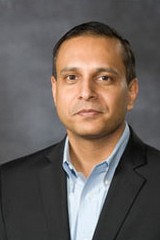
In the journal Hepatology, Devanand Sarkar, Ph.D., M.B.B.S., Harrison Scholar at VCU Massey Cancer Center, a Blick scholar and assistant professor in the Department of Human and Molecular Genetics and a member of the VIMM at VCU School of Medicine, describes for the first time how RNA-induced silencing complex (RISC) contributes to the development of liver cancer.
RISC is an important factor in post-transcriptional gene regulation, which occurs between transcription (where DNA is converted to RNA) and translation (where RNA is converted to protein). These processes regulate functions such as cellular growth, division and death. Sarkar and his team identified the proteins AEG-1 and SND1 as factors that increase RISC activity and lead to the development of liver cancer.
For years, Sarkar has been studying the role of AEG-1 in cancer with his collaborator on this research, Paul B. Fisher, M.Ph., Ph.D., the Thelma Newmeyer Corman Endowed Chair in Oncology Research at VCU Massey, professor and chair of the Department of Human and Molecular Genetics and director of the VIMM.
"AEG-1 works as a scaffold protein," says Sarkar. "If you think about scaffolding outside of a biological setting, its function is to help facilitate things like construction. In this case, AEG-1 was found to work with another protein, SND1, to provide the scaffold for the formation of RISC. Since both AEG-1 and SND1 are increased in HCC, the net effect is increased RISC activity."
The study clearly identifies SND1 as a novel regulator of liver cancer. As SND1 is a molecule that can be inhibited by drugs, Sarkar's findings open up a novel avenue for treating liver cancer by targeting SND1.
"RISC works by degrading tumor-suppressor mRNAs, which transmit genetic information in a cell that prevents the formation of tumors. This allows other cancer-causing factors to go unchecked and aid tumor growth," says Sarkar. "Since we've shown that RISC activity is higher in cancer cells than normal, healthy cells, we're hopeful that inhibiting SND1 to decrease RISC activity will do little, if any, damage to healthy liver cells while stopping cancer progression."
Sarkar's team is working hard to find the most clinically-relevant SND1 inhibitors. Once these are found, the researchers will need to prove their effectiveness in several more experiments. The ultimate goal is to move these findings to Phase I clinical trials for patients with liver cancer.
In addition to Fisher, other collaborators on this study included Lewis K. Pannell, Ph.D., professor of oncologic sciences in the Mitchell Cancer Institute of the University of South Alabama; Luni Emdad, M.B.B.S., Ph.D., assistant professor from Mount Sinai Medical Center; and Byoung Kwon Yoo, Ph.D., Prasanna K. Santhekadur, Ph.D., Rachel Gredler, B.S., Dong Chen, M.D., and Sujit Bhutia, Ph.D., all from the VCU School of Medicine.
Funding for this study was provided by grants from the National Institutes of Health, the James S. McDonnell Foundation and the Dana Foundation.
The full manuscript is available online at: http://onlinelibrary.wiley.com/doi/10.1002/hep.24216/abstract.
Written by: Massey Communications Office
Related News
Research & Innovation
Genetic code deploys cancer mafia, new targeted drug gives them an offer they can’t refuseSep 3, 2025
Community Engagement
Students Caring About Cancer (SCAC ) at VCU collaborates with Massey to build community and pursue advocacy effortFeb 27, 2025

Get access to new, innovative care
Treatments in clinical trials may be more effective or have fewer side effects than the treatments that are currently available. With more than 200 studies for multiple types of cancers and cancer prevention, Massey supports a wide array of clinical trials.

Find a provider
Massey supports hundreds of top cancer specialists serving the needs of our patients. Massey’s medical team provides a wealth of expertise in cancer diagnosis, treatment, prevention and symptom management.