
Latest News
Clinical Care, Prevention
Head and Neck Cancer Awareness Month Q&A: Signs to look out for, treatment options and how to lower your risk
Apr 30, 2026
April is Head and Neck Cancer Awareness Month. While head and neck cancers are not as common as many other disease types, cases of human papillomavirus (HPV)-related head and neck cancers have been on the rise in the U.S. and globally.
The National Cancer Institute estimated that approximately 72,680 people in the U.S. would be diagnosed with cancer of the oral cavity, pharynx, or larynx—the major types of head and neck cancer—in 2025, and that 16,680 people would die from these diseases.
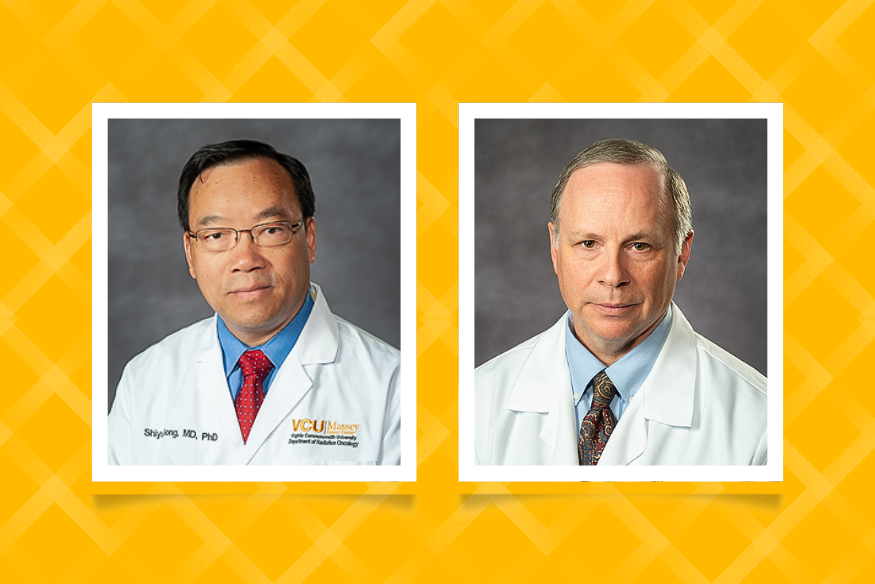
We sat down with two experts at VCU Massey Comprehensive Cancer Center to learn more: Shiyu Song, M.D., Ph.D., a radiation oncologist, and Laurence DiNardo, M.D., a head and neck surgeon, to talk about head and neck cancers, symptoms, key risk factors and what treatments are available if someone is diagnosed.
What do you do at Massey and what brought you here?
Song: I'm a clinical physician specializing in head and neck cancer. I also joined the faculty at VCU in 2004 as a professor in the School of Medicine’s Department of Radiation Oncology. My clinical interests include head and neck cancers, lymphomas, lung cancer and the central nervous system.
DiNardo: I am a head and neck surgeon who diagnoses and surgically treats patients with head and neck cancer. The chance to practice in a comprehensive multidisciplinary environment that administers state-of-the-art care attracted me to Massey 35 years ago.
Head and neck cancer is a complex and devastating disease that can cause significant disability even with successful treatment. The surgery is incredibly intricate and complex. Vital functions such as speech, swallowing, hearing, breathing and even vision must be considered. I was drawn to the challenge of this surgery and the chance to make a profound difference in the lives of these patients.
What types of cancer are included in the head and neck category?
Song: The primary types of head and neck cancers include oral cavity, pharyngeal (throat), laryngeal (found in the vocal cords or surrounding areas), nasal cavity and paranasal sinus, and the salivary glands.
Are there any symptoms of head and neck cancers?
Song: One thing to look out for is pain in the mouth that doesn’t go away after several weeks. People should also stay vigilant of a persistent sore throat, any lumps or growths in the neck, difficulty swallowing, voice changes and any sores on or within the head and neck that won’t heal.
Are there any standard screenings?
Song: There are no standard, regularly performed screenings for head and neck cancers. However, if you notice any symptoms or anything abnormal happening in your body, you should certainly mention your concerns to your doctor.
What are the available treatments?
DiNardo: Traditionally, head and neck cancer has been treated with surgery, radiation therapy and chemotherapy alone or in various combinations. In the surgical realm, reconstructive options continue to expand over the past several decades. More recently, biologics—a class of medications made from living organisms—are being studied and increasingly utilized to eradicate cancer.
Song: Immunotherapy has also recently come into the picture for head and neck cancer treatments.
Does Massey offer any unique treatments?
DiNardo: Massey offers a substantial number of clinical trials, including the most promising targeted therapies. In addition, we offer radiation therapy, surgery, chemotherapy and support services all in a multidisciplinary setting within a comprehensive cancer center.
Song: At Massey, we are one of the centers in the nation leading the development and implementation of newer treatment technology aiming for more precise treatment.
What are potential side effects of treatment?
Song: Acute radiation side effects are pain in the mouth or throat, difficulty swallowing, loss of taste, dry mouth, decreased appetite, weight loss or dehydration. Many patients experience long term side effects, such as dry mouth, taste changes and damage to the jaw bones or nerves. With new technologies, all these side effects are reduced, and severe complications are less common.
DiNardo: The potential side effects of treatment are substantial. This is particularly true since vital functions such as speech, swallowing, breathing, hearing and vision are jeopardized by not only the disease, but also the treatment designed to cure it. The promise of targeted therapy, such as biologics, is to achieve cure with minimal side effects.
Are there any misconceptions about head and neck cancers?
Song: People pay attention to smoking-related lung cancer risks, but many do not know that smoking and alcohol drinking are risk factors for head and neck cancers. Smoke cessation substantially reduces the risk of head and neck cancers.
DiNardo: Head and neck cancer has long been considered a disease of smoking and alcohol use. Today, most oropharyngeal cancer is the result of HPV infection. Autoimmune disease is also being recognized as causative in some cases. Many suppose head and neck cancer is incurable. This is certainly not the case. Treatment has become highly successful with improved survival rates over the years.
How can people lower their risk of head and neck cancers?
Song: Smoking tobacco and drinking alcohol are two major lifestyle factors that can largely contribute to your risk of developing head and neck cancers. Refraining from these substances can drastically reduce your likelihood of these types of cancer.
Since HPV infection is also a leading cause of oropharyngeal cancers, you can also reduce your risk by getting the HPV vaccine.
Learn more about head and neck cancer treatment at Massey.
Related News
Research & Innovation, Clinical Care, Prevention , Leadership
International community gathers for 2026 Global Cardio-Oncology Summit in WilliamsburgOct 14, 2026

Get access to new, innovative care
Treatments in clinical trials may be more effective or have fewer side effects than the treatments that are currently available. With more than 200 studies for multiple types of cancers and cancer prevention, Massey supports a wide array of clinical trials.

Find a provider
Massey supports hundreds of top cancer specialists serving the needs of our patients. Massey’s medical team provides a wealth of expertise in cancer diagnosis, treatment, prevention and symptom management.