
Latest News
Research & Innovation
VCU Massey now offers new technology for early detection of lymphedema
Dec 8, 2025
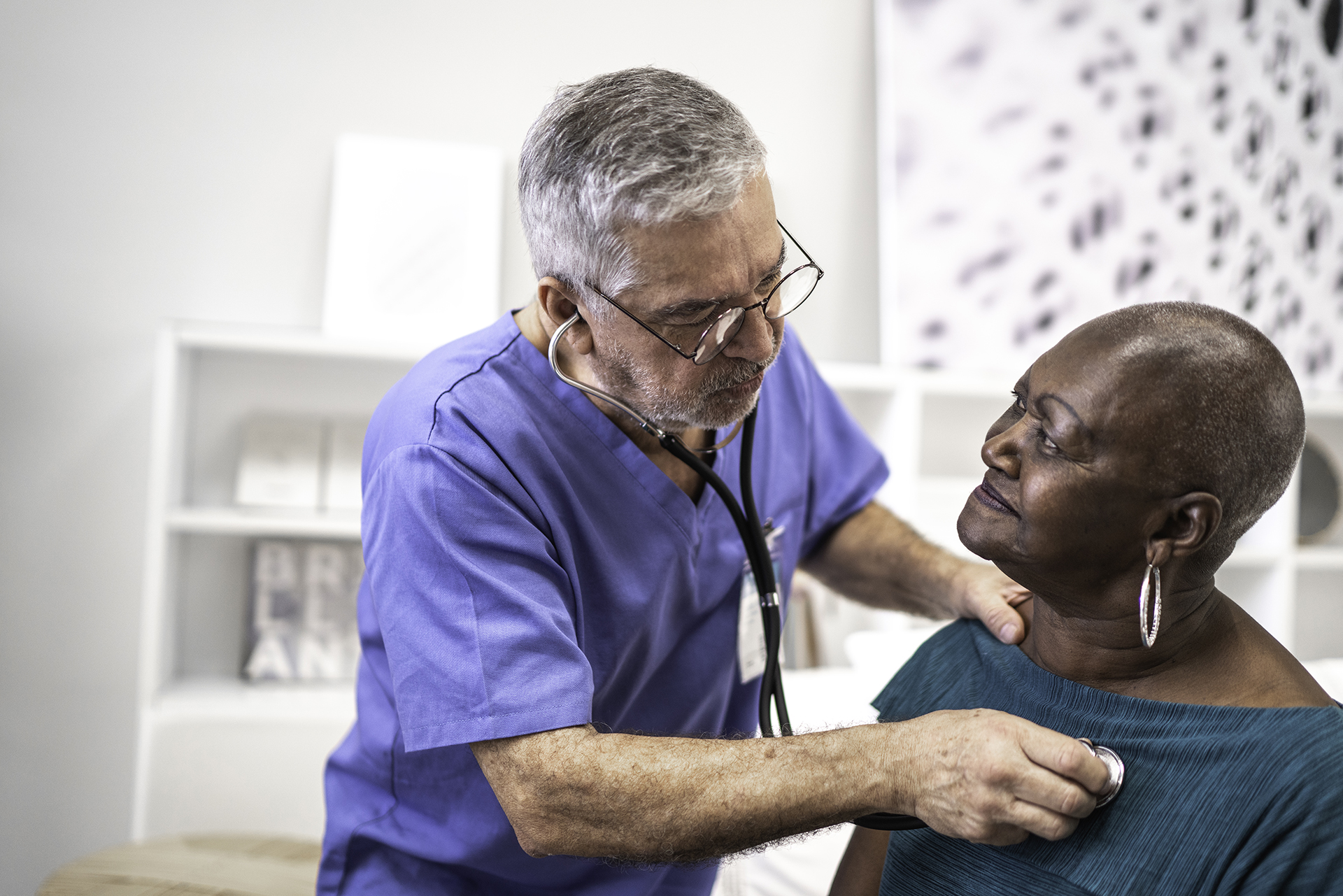
 VCU Massey Comprehensive Cancer Center now offers a cutting-edge technology—bioimpedance spectroscopy—to help detect lymphedema in its earliest stages, sparing many breast cancer patients from a painful complication that can become a burdensome, lifelong condition. (iStock)
VCU Massey Comprehensive Cancer Center now offers a cutting-edge technology—bioimpedance spectroscopy—to help detect lymphedema in its earliest stages, sparing many breast cancer patients from a painful complication that stems from the surgical removal of lymph nodes or radiation therapy as part of routine cancer treatment. For many patients, lymphedema is detected late and becomes a burdensome, lifelong condition.
“Usually, when we detect lymphedema, it’s because someone has symptoms,” said Kandace McGuire, M.D., FACS, interim senior vice president of the Cancer Service Line and chief of breast surgery at Massey. “At that point, it’s often irreversible – you can manage the symptoms, but it will be a lifelong battle. If we can find it early and treat it early, it gives patients the ability to live their life free of lymphedema symptoms.”
Rates of lymphedema — a build-up of fluid between the skin and the muscle that can cause significant swelling and discomfort — can range from as low as 2% of patients receiving the least invasive sentinel node biopsy to up to 50% in some patients who need a full lymph node dissection as part of their cancer treatment.
Breast cancer patients at Massey will now be monitored using bioimpedance spectroscopy, a minimally invasive technology that measures the fluid in a limb at risk for lymphedema. Patients can receive a baseline measurement before surgery, allowing for easy detection of small fluid changes at post-operative appointments.
The test is done as part of a patient’s regular intake along with their blood pressure and heart rate measurements. Patients simply place their hands and feet on the device, and results are shown in under a minute.
With this new method, Massey’s breast cancer team can identify early lymphedema-related fluid changes before the patient experiences any symptoms. Patients will then be referred to the cancer center’s lymphedema rehabilitation program. With occupational and physical therapy – including use of a compression sleeve, therapeutic massage and exercise – the lymphedema can be either stabilized or reversed in the majority of patients.
“We are thrilled for the opportunity to continue to bring innovations in cancer care to breast cancer patients and survivors here at Massey,” said McGuire, who is also a member of the Developmental Therapeutics research program at Massey and a professor of surgery at the VCU School of Medicine. “Based on the studies of this technology in a clinical setting, this early detection measurement leads to treatment that is successful in 80-85% of patients. That could change the face of lymphedema.”
This early surveillance technology is one approach of many available to lymphedema patients at Massey. For patients whose lymphedema progresses, surgical options are available to help alleviate limb swelling, improve the effectiveness of therapy, and decrease the risk of cellulitis, a bacterial infection of the skin.
“At Massey, we’re redefining breast cancer recovery,” said Paschalia Mountziaris, M.D., Ph.D., reconstructive microsurgeon at Massey and VCU Health and program director of the VCU Plastic Surgery Residency. "Our lymphedema program delivers the region's most advanced care, combining innovative microsurgical techniques—including implant-free breast reconstruction, sensory nerve repair and lymphovenous bypass—all to help patients not only manage lymphedema, but, in some cases, to try to prevent it altogether."
In 2021, Massey also became the first in the state of Virginia to use an FDA-approved substance that allows surgeons to spare the lymph nodes in the vast majority of early-stage breast cancer patients. This advance also reduces patients’ risk of developing lymphedema.
Written by: Blake Belden
Related News
Research & Innovation
Researchers identify Achilles’ heel in lung cancer through common p53 genetic mutationMar 9, 2026
Research & Innovation
Neighborhood factors related to financial stress are linked to worse breast cancer outcomes; interventions could improve survivorshipFeb 18, 2026
Research & Innovation, Clinical Care, Community Engagement
Clinical trials: Shaping the standard of cancer care for the countryFeb 9, 2026

Get access to new, innovative care
Treatments in clinical trials may be more effective or have fewer side effects than the treatments that are currently available. With more than 200 studies for multiple types of cancers and cancer prevention, Massey supports a wide array of clinical trials.
Find a provider
Massey supports hundreds of top cancer specialists serving the needs of our patients. Massey’s medical team provides a wealth of expertise in cancer diagnosis, treatment, prevention and symptom management.