
Latest News
Research & Innovation
Combination treatment harnesses cellular recycling system to fight multiple myeloma
Jul 13, 2026
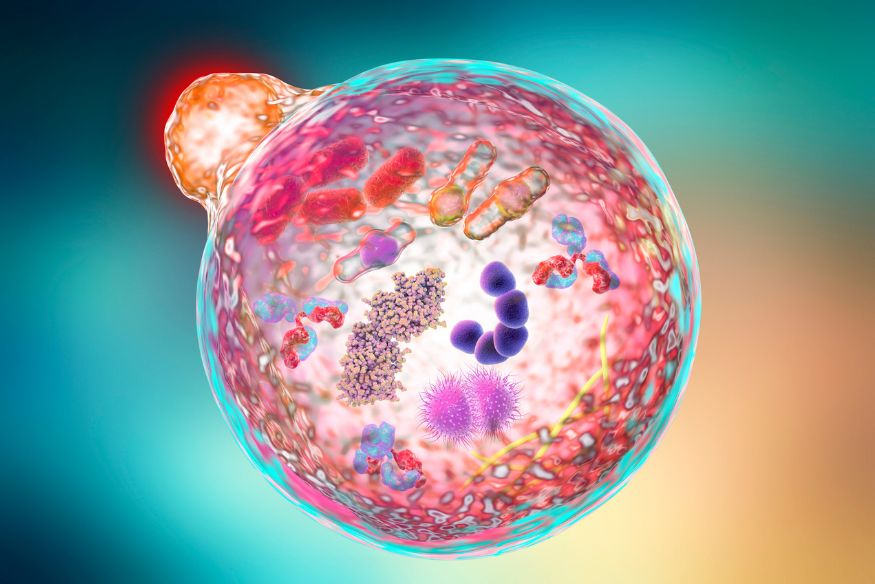
New research out of VCU Massey Comprehensive Cancer Center provides promising evidence for an innovative combination treatment strategy that uses cells’ waste removal functions to effectively dismantle multiple myeloma. The findings, published recently in Cell Death & Disease, show how an experimental targeted protein degrader, developed in-house at the cancer center, enhances the destruction of a specific cancer cell survival protein and works in tandem with existing drugs in preclinical models, while showing limited toxicity in cardiac models.
“Treatment resistance remains a major challenge in multiple myeloma,” said study senior author Senthil K. Radhakrishnan, Ph.D., member of the Cancer Biology research program at Massey and professor of pathology at the VCU School of Medicine. “Our findings point to a new way of using the cancer cell’s own recycling machinery against it, with the goal of making existing treatments more effective.”
About multiple myeloma
- Multiple myeloma is a cancer of the white blood cells in the bone marrow known as plasma cells.
- The American Cancer Society estimates about 36,000 new cases will be diagnosed in the U.S. this year.
- Most commonly diagnosed in people ages 65 or older.
What are proteasome inhibitors?
Proteasome inhibitors are a class of targeted therapies that are a cornerstone of treatment for multiple myeloma.
“The proteasome is the machine within cells that degrades proteins that are no longer needed,” Radhakrishnan said.
When the proteasome is blocked using inhibitors in multiple myeloma, the myeloma cells die because they can’t remove unwanted proteins, and the buildup of proteins becomes toxic to the cancer. However, cancer cells often harness a cellular process called autophagy to clean up the proteins and develop resistance to these drugs when used alone, allowing for the cancer to return to a rapidly growing state.
What is autophagy?
Autophagy is a critical cellular cleaning service through which a cell breaks down and recycles irregular proteins and other substances, as well as destroys bacteria and viruses that lead to infection. However, once a cancer has formed, autophagy can sometimes feed cancer cells or protect them from targeted drugs.
Myeloma cells fight back against proteasome inhibitors by invoking autophagy as a survival tactic.
Previously, the school of scientific thought has suggested that deliberately blocking autophagy will cause myeloma cells to collapse and die. This study took a different approach, redirecting the autophagy pathway to selectively eliminate the MCL1 protein.
The research findings
The research team designed a molecule that uses autophagy to target and degrade an important survival protein—MCL1—on which many multiple myeloma cells depend. The molecule is an autophagy-targeting chimera, or AUTAC.
“We’re using the autophagy response and degrading this critical protein and killing the cancer cells,” Radhakrishnan said. “MCL1 is usually broken down through the proteasome, but we’re forcing MCL1 to be degraded through autophagy.”
Targeted protein degradation is an up-and-coming treatment strategy. Where many current targeted cancer drugs work by preventing the normal functions of different tumor-driving proteins, targeted protein degradation conversely aims to completely remove the proteins altogether.
When using their molecule in combination with a proteasome inhibitor, the research team observed enhanced activity in preclinical multiple myeloma models.
“After 48 hours, we saw a 50% reduction in multiple myeloma cell viability in preclinical models,” said study lead author Ahmed M. Elshazly, B.Pharm, M.Sc., a Ph.D. candidate in the Department of Pathology at the VCU School of Medicine. “We confirmed that our drug, as a complete molecule, is able to induce cancer cell death.”
Cardiac safety has been an important concern in the development of therapies targeting MCL1. In the cardiac models examined in this study, the AUTAC showed limited toxicity while retaining activity against cancer cells.
Additionally, the research team demonstrated that the treatment strategy effectively degraded MCL1 in non-small cell lung cancer.
What’s next?
For multiple myeloma, the research team plans to further optimize the molecule and evaluate improved candidates in additional preclinical studies.
Additionally, these findings could have implications for the development of treatment strategies for other tumors that depend on MCL1, including breast cancer, lung cancer and melanoma, among others.
“We are trying to increase the potency of this molecule using medicinal chemistry. This study is just proof of principle, so we want to continue to improve on it,” Radhakrishnan said.
Collaborators
- Massey research members: Steven Grant, M.D., and Hisashi Harada, Ph.D.
- Additional VCU collaborators: Nayyerehalsadat Hosseini, Ph.D., Xiaoyan Hu, Ph.D., Victoria Neely, Piyusha Pagare, Ph.D., Shanwei Shen, M.D., Ph.D., and Janakiram Vangala, Ph.D.
This research was funded by:
Written by: Blake Belden
Related News
Research & Innovation
Simulating cellular environments to fight advanced prostate cancerOct 7, 2026
Research & Innovation
VCU Massey researchers receive $2.5M NIH grant to inform breast, pancreatic cancer careSep 9, 2026

Get access to new, innovative care
Treatments in clinical trials may be more effective or have fewer side effects than the treatments that are currently available. With more than 200 studies for multiple types of cancers and cancer prevention, Massey supports a wide array of clinical trials.

Find a provider
Massey supports hundreds of top cancer specialists serving the needs of our patients. Massey’s medical team provides a wealth of expertise in cancer diagnosis, treatment, prevention and symptom management.