Latest News
Research & Innovation, Community Engagement
Virginia public health leaders turn community priorities into action
Jun 9, 2026
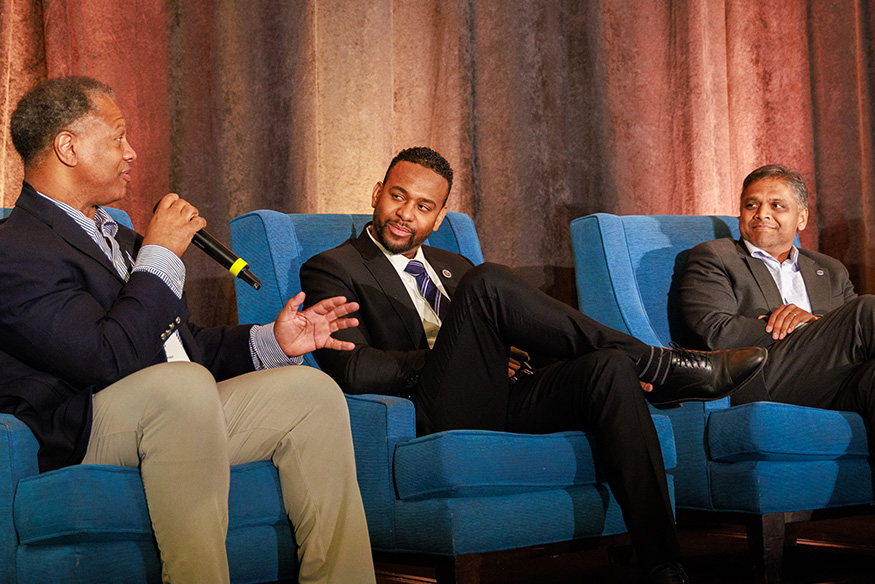 Robert A. Winn, M.D., Cameron Webb, M.D., and Danny Avula, M.D., spoke about the legacy of statewide public health during the Virginia Public Health Summit on Cancer.
More than 230 public health experts, scientists and community advocates filled a room at the Richmond Marriott, representing 30 health districts from across the state, for the Virginia Public Health Summit on Cancer on June 2.
Robert A. Winn, M.D., the outgoing director of VCU Massey Comprehensive Cancer Center, addressed the room, recognizing the contributions of those who came before him that set the stage for the current status of cancer prevention, screening and care.
“Since 1991, 34% more people are showing up to birthday parties, weddings and graduations; that happened because of a team,” Winn said, challenging his peers to identify new strategies to harness those team successes to further improve the health of all populations. “Sometimes it’s not about doing extraordinary things, but doing the ordinary really well.”
This year’s conference—organized in partnership between Massey, UVA Comprehensive Cancer Center, the Virginia Department of Health and Genentech—was centered on the topic: “Community Priorities to Practical Action.”
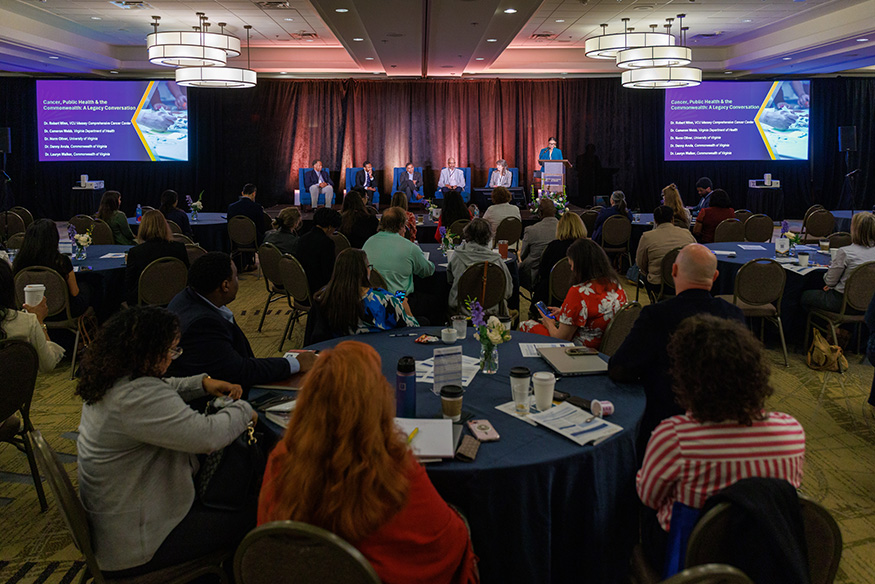 More than 230 public health experts, scientists and community advocates attended the Virginia Public Health Summit on Cancer
“This year’s theme is intentional; today is about asking ‘what do we do next together?’” said Katherine Y. Tossas, Ph.D., MS, the director of Catchment Area Data Analytics at Massey, who was pivotal to the inception of this annual conference four years ago.
More than 230 public health experts, scientists and community advocates attended the Virginia Public Health Summit on Cancer
“This year’s theme is intentional; today is about asking ‘what do we do next together?’” said Katherine Y. Tossas, Ph.D., MS, the director of Catchment Area Data Analytics at Massey, who was pivotal to the inception of this annual conference four years ago.
Lauryn Walker, Ph.D., MPH, the deputy secretary of health and human services in Virginia, spoke on behalf of the Office of the Governor, championing the meeting’s mission and stating that public health experts from different districts are responsible for helping move the needle for policy and action statewide.
“The work you are doing here is not abstract to this administration,” Walker said, speaking from personal experience as a cancer patient. “Cancer diagnoses often come years after diagnoses of other chronic diseases. That’s why the work you all are doing today can prevent those diagnoses in the future.”
Cancer, public health and the commonwealth
Statewide health leaders kicked off the conference through a panel conversation on the legacy of public health coordination in Virginia, including lessons learned from the COVID-19 pandemic, the importance of collaboration and community engagement in achieving better health outcomes, and harnessing public-private partnerships to positively improve healthcare for all individuals.
Panelists included:
- Danny Avula, M.D., Richmond City mayor
- Norm Oliver, M.D., MA, former state health commissioner and professor emeritus at the University of Virginia
- Elaine Perry, M.D., district director for the Richmond and Henrico Health Districts
- Cameron Webb, M.D., state health commissioner for the Virginia Department of Health
- Robert A. Winn, M.D., the outgoing director of Massey
Webb, who never met his maternal grandparents as a byproduct of social determinants of health, shared his personal narrative to exemplify how the pillars of cancer and public health are partly generational.
“Today, when we talk about this work, it will have an impact 40-50 years from now,” Webb said. “That is public health in its essence.”
Avula emphasized how public health institutions and cancer centers need to continue to align their resources and goals to come together to further benefit the communities they serve.
“So much of public health's value is being deeply connected into communities, knowing the unique dynamics of a community, who are the trusted voices where the centers of influence are,” Avula said. “Bringing cancer centers and public health together…creates synergies and opportunities both for new strategies, new programs, new initiatives, but also the way that we bring resources together. At the end of the day, what we're trying to do is improve health and well-being [and] life expectancy in communities."
Advancing public health through small investments
The following session focused on ways to make an impact by harnessing grit and leveraging available tools.
Presenters included:
- Shanteny Jackson, MA, executive director of the Virginia Community Health Worker Association (VACHWA)
- Tiffany Stewart, DNP, APRN, FNP-BC, family nurse practitioner and nurse practitioner residency program director at Central Virginia Health Services
- Arnethea Sutton, Ph.D., assistant director of Community Outreach and Engagement at Massey
- Marcie Wright, Ph.D., MPH, associate director of the VCU Center on Health Advancement
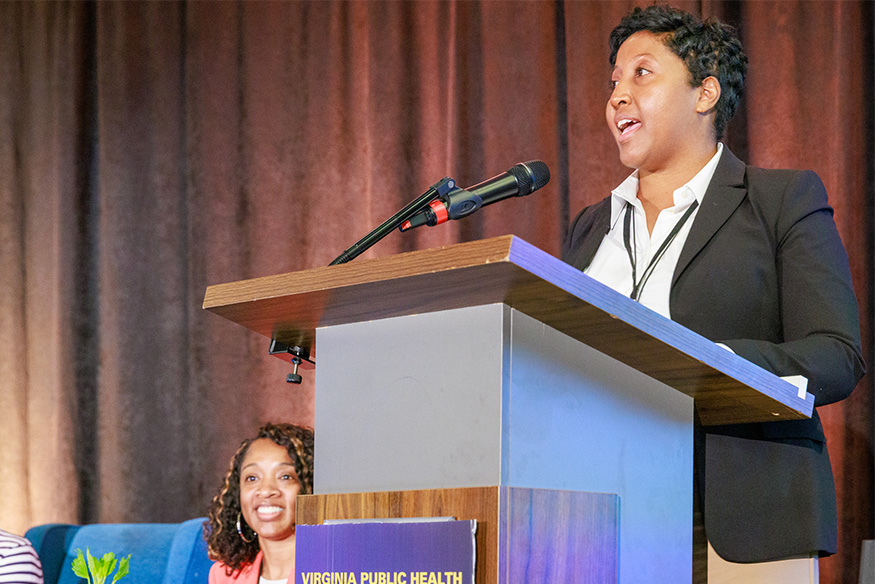 Marcie Wright, Ph.D., MPH
Whether it’s finding ways to bridge the distance between patients and healthcare facilities during winter weather or fostering community engagement through the guidance of faith leaders, the presenters highlighted how there are countless small investments that can be made to improve public health on a broader scale.
Marcie Wright, Ph.D., MPH
Whether it’s finding ways to bridge the distance between patients and healthcare facilities during winter weather or fostering community engagement through the guidance of faith leaders, the presenters highlighted how there are countless small investments that can be made to improve public health on a broader scale.
Jackson shared how training community health workers (CHWs) to be lung health ambassadors allowed her team to meet people where they were with the resources they already had.
“The small investments produce a big win, because we were able to recognize the value of CHWs in their day-to-day outreach,” Jackson said.
Through a 40-hour training program, hospital partnerships, and paid opportunities for CHWs to lead outreach, VACHWA was able to create a network of trusted messengers to reach communities in high-risk catchment areas, spread awareness about lung cancer, and provide tools for smoking cessation.
“In order to move the dial, we must move beyond the clinic walls,” Jackson said.
Training the next generation of community-engaged leaders
Another panel session during the summit focused on the Executive Leadership Academy for Cancer Centers (ELACC), an 18-month academy launched by Massey and the Medical University of South Carolina (MUSC) Hollings Cancer Center for those who aspire to be a future NCI-designated cancer center leader.
Session panelists included:
- Maria Almond, M.D., MPH, Piedmont Health District Director
- Jennifer Koblinski, Ph.D., research member at Massey and current ELACC fellow
- Joni Nelson, Ph.D., assistant professor at MUSC and current ELACC fellow
- Robert A. Winn, M.D.
Koblinski shared insights from her participation in the academy, including the inspiration behind her Brushstrokes of Discovery project, a community-focused mural celebrating the partnership between cancer patients and scientists that advances research discoveries, and the powerful role of listening to the community—”being a servant leader”—in fostering trust beyond the walls of the laboratory.
Understanding cancer-related needs across Virginia
Meghan Tipre, DrPH, MSPH, assistant director of Catchment Area Data Analytics at Massey, took a moment to highlight the 2025 Community Health Survey, which was launched last year in partnership with UVA Comprehensive Cancer Center.
Together, Massey and UVA gathered community input from diverse voices and actionable recommendations from residents in both cancer centers’ catchment areas, many of whom experience a higher disease burden.
Public-private partnerships can help health districts deliver
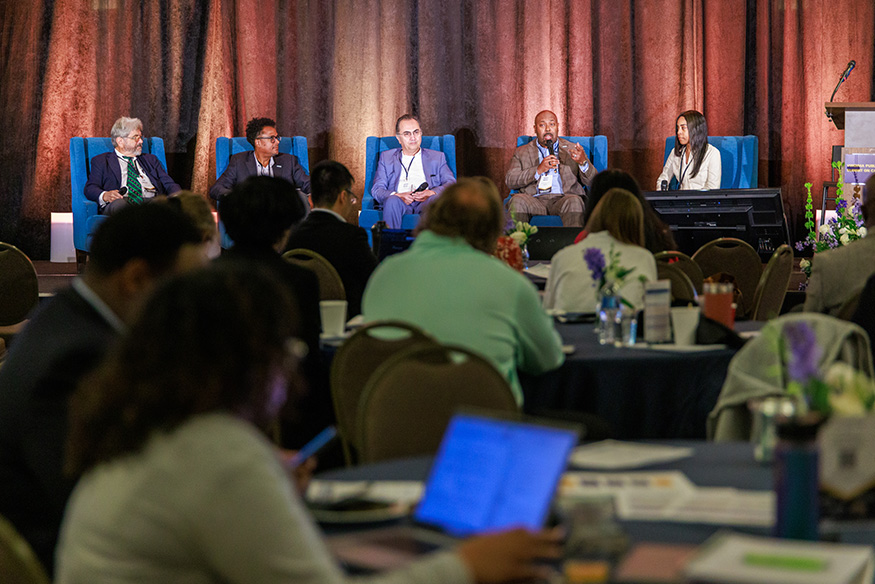 A panel discussed biopharmaceutical industries and health districts
A panel discussion in the afternoon, featuring multiple leaders from the biotech company Genentech, covered the intersecting priorities of biopharmaceutical industries and health districts as a means to benefit patient care and outcomes for all individuals.
A panel discussed biopharmaceutical industries and health districts
A panel discussion in the afternoon, featuring multiple leaders from the biotech company Genentech, covered the intersecting priorities of biopharmaceutical industries and health districts as a means to benefit patient care and outcomes for all individuals.
Session panelists included:
- Ray Gill, senior manager of state government affairs for Genentech
- Robert Nelson, healthcare executive director for Genentech
- Ahmad Nessar, medical affairs executive director for Genentech
- Scott Spillman, M.D., MPH, director of the Pittsylvania-Danville & Southside Health District
Nelson referenced a mantra on the wall at Genentech—”If you do it without us, it’s not about us”—to emphasize the message that creating a healthier Virginia must always be grounded in the patient perspective and input from community health partners.
“Being in rooms like this, working with you all…is really what it’s going to take to remove those barriers to access,” Nelson said, adding that talk is great, but action is needed. “We have to take action. Action means we have to make progress with patients.”
The future of public health
The final presentation of the afternoon was provided by Brian C. Castrucci, DrPH, MA, the president and CEO of the de Beaumont Foundation. As an epidemiologist, public health advocate and fierce advocate for the public’s health, Castrucci shared exciting ideas for how we can work toward a shared public health playbook.
He identified three major strategies:
- Communicate better
- Build deep relationships with people who don’t agree with you
- Upskill the workforce
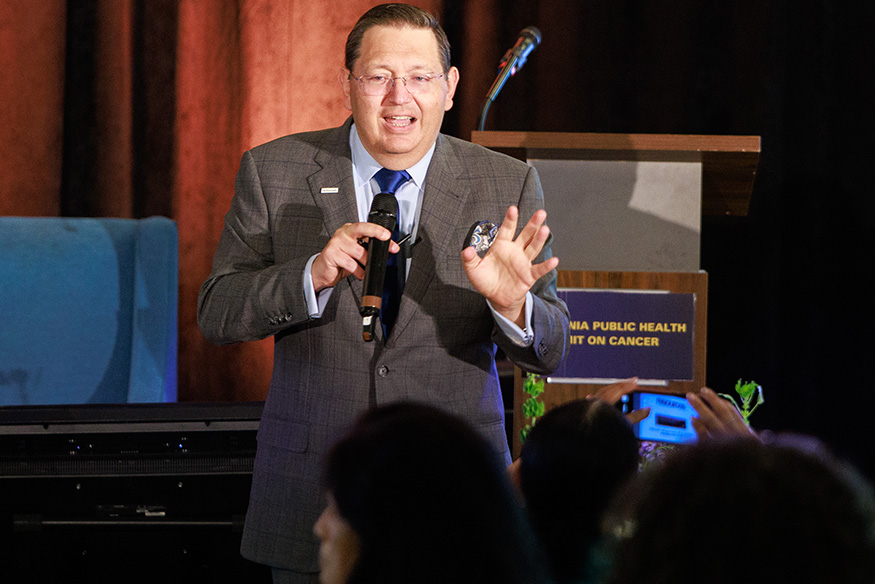 Brian C. Castrucci, DrPH, MA
Better communication includes establishing a more coherent brand identity for public health. This is an aspect of the field with substantial opportunity for growth, as there is currently no common definition of what public health truly is.
Brian C. Castrucci, DrPH, MA
Better communication includes establishing a more coherent brand identity for public health. This is an aspect of the field with substantial opportunity for growth, as there is currently no common definition of what public health truly is.
Castrucci emphasized that in order to build relationships with the public, you must be willing to hear people who are on the other side of issues to see where they are coming from.
Being able to connect with people and come together for a shared cause is essential, during public health emergencies and in everyday life.
“You don’t make relationships in times of crises,” Castrucci said. “You make relationships in times of peace.”
Written by: Blake Belden, Tatiana Del Valle
Related News
Research & Innovation
VCU Massey researchers receive $2.5M NIH grant to inform breast, pancreatic cancer careSep 9, 2026
Research & Innovation
Depression and stress drive long-term fatigue for breast cancer survivorsSep 3, 2026
Get access to new, innovative care
Treatments in clinical trials may be more effective or have fewer side effects than the treatments that are currently available. With more than 200 studies for multiple types of cancers and cancer prevention, Massey supports a wide array of clinical trials.
Find a provider
Massey supports hundreds of top cancer specialists serving the needs of our patients. Massey’s medical team provides a wealth of expertise in cancer diagnosis, treatment, prevention and symptom management.