Latest News
Clinical Care, Patient Stories
A Mother’s Day to Remember: How Massey Comprehensive Cancer Center gave Mary Beth Brault more memories to make
May 7, 2026
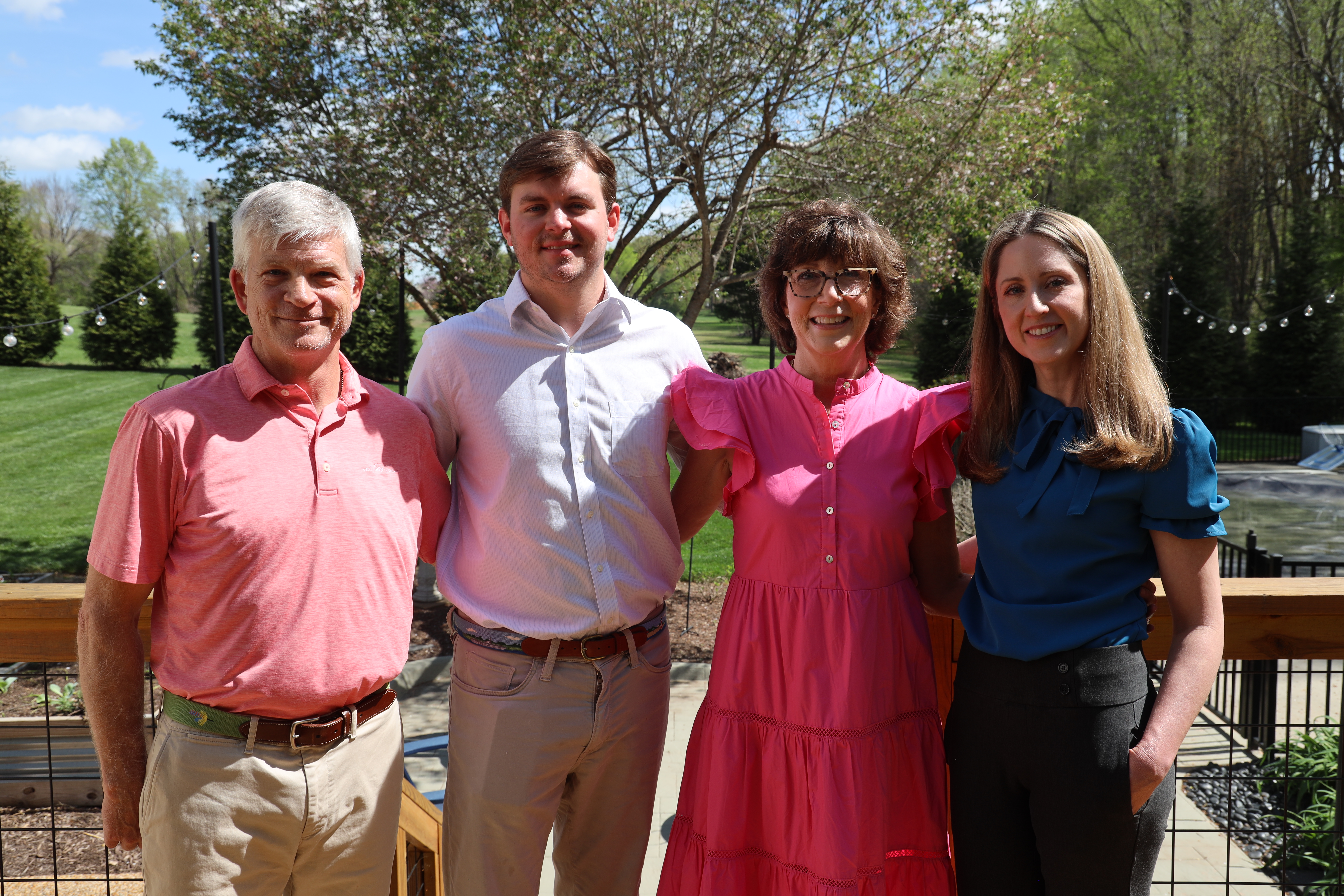 Mary Beth Brault (second from right) with the three people she credits with saving her life (from left to right): her husband Fred; her son Colin; and Dr. Keri Maher, D.O.
“I think I’m dying..”
Mary Beth Brault didn’t know what was wrong, just that something was. For a month, simple actions like walking to her office or climbing the stairs would leave her winded and exhausted. The swelling in her legs Mary Beth chalked up to walking in the humid Richmond summer, gardening at her home in Goochland County, or visiting her son, Colin, in Charleston, South Carolina.
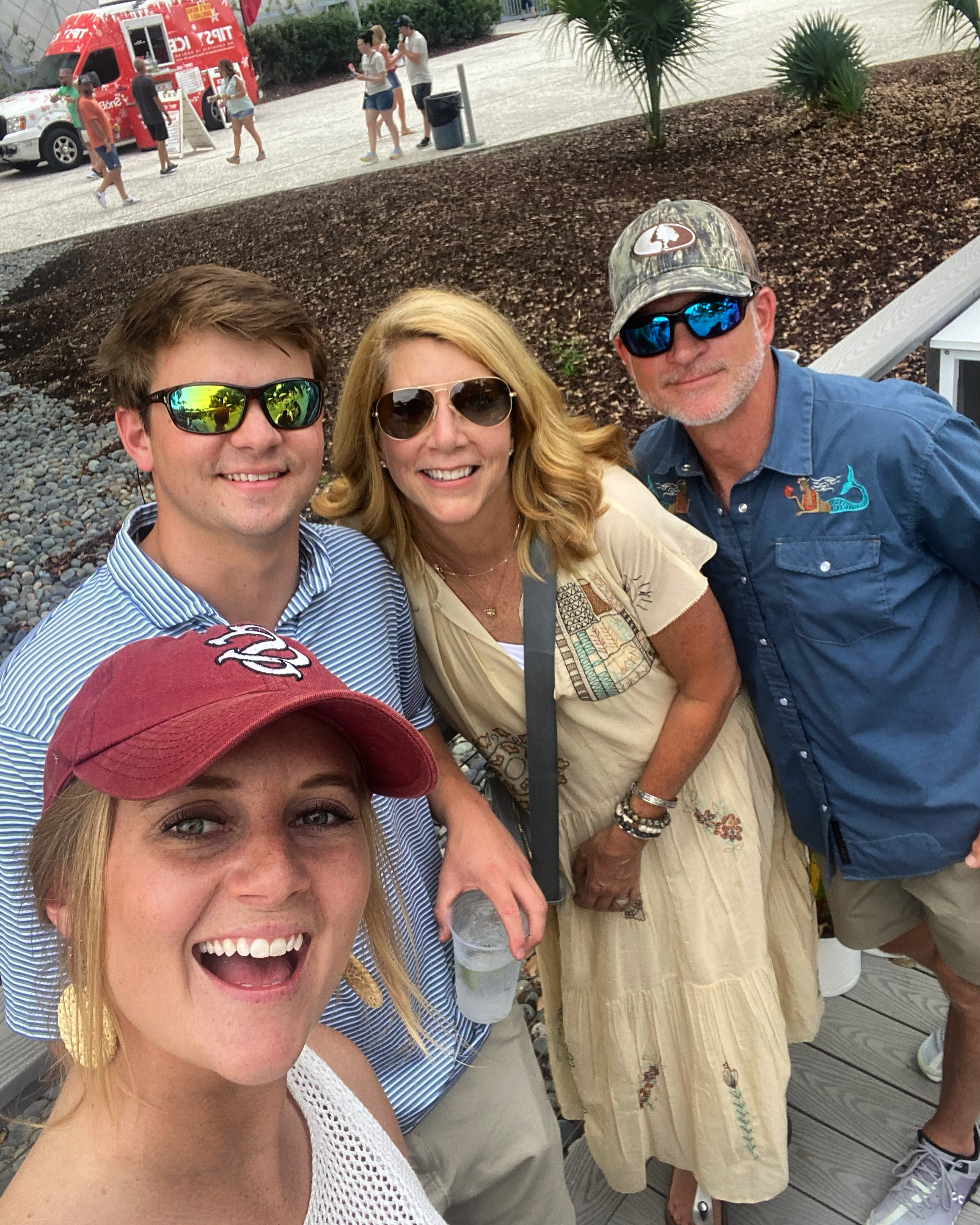 Mary Beth Brault (center), with her family before her cancer diagnosis
But things finally came to a head when she uttered those words to her husband at the end of July 2023, starting a nearly three-year journey with VCU Massey Comprehensive Cancer Center.
Mary Beth Brault (center), with her family before her cancer diagnosis
But things finally came to a head when she uttered those words to her husband at the end of July 2023, starting a nearly three-year journey with VCU Massey Comprehensive Cancer Center.
“Ask for Dr. Maher.”
After returning home from a quick weekend trip to the Northern Neck, Mary Beth checked into a local hospital, where it was found she was severely anemic. Still, initial tests focused on the possibility that she had an ulcer due to her use of ibuprofen for knee pain.
That all changed the next day when, following more tests, a hematologist came into Mary Beth’s room.
“I knew enough to know hematology was blood. And she said to me, ‘we're transferring you to VCU. You have a problem with your blood, and they're better able to deal with this.’ And she turned to walk out and I stopped her, and I said, ‘do I have blood cancer?’
“And she said, ‘yes.’ And I said, ‘do I have leukemia?’ And she said, ‘yes.’ And you know, my whole world blew up.”
In the process of preparing for the transfer to VCU, Mary Beth called a family friend whose husband had been treated for acute lymphoblastic leukemia (ALL). That friend provided a crucial piece of advice: “I told her I was getting transferred to VCU Massey, and she said, ‘ask for Dr. Maher and take any clinical trial she offers you.”
“It’s curable.”
Fortunately for Mary Beth, Keri Maher, DO, the medical director of the Clinical Trials Office at Massey, was serving as the inpatient attending on the leukemia floor that morning.
Immediately, Maher recognized that Mary Beth had the resolve to fight.
“I remember when I first met her, we didn't have all of her diagnostic information yet,” Maher recalled. “I could tell her the overarching diagnosis, but I couldn't tell her the finer parts. I said that we would be doing our workup and then we would talk about treatment plan options in detail.
“But that either way, for people her age with this type of leukemia, that it's curable. And that's what we were going to try to do.”
For Mary Beth, those words provided a great source of comfort, as did one other notable part of rounds that morning: “It wasn't just one doctor who walked in the room, but a whole team. And every single one of them asked me to tell my story. Every single one of them asked for my symptoms. And I had this feeling that I was exactly where I needed to be. It was comforting at a time when my whole world was horrific.”
In order to properly diagnose and treat acute leukemia, testing is required to learn a patient’s molecular subtypes and chromosomes to build their treatment plan. Tests eventually confirmed that Mary Beth had a rare type of acute lymphoblastic leukemia called pH-positive ALL. Beyond that, she had a subset with an IKZF1 mutation.
With those details figured out, Maher recommended they start exploring a clinical trial as Mary Beth’s first line of care. The trial Mary Beth enrolled in compared conventional chemotherapy with a targeted therapy to an immunotherapy with the same targeted therapy. In the trial, Mary Beth was randomized to the immunotherapy arm.
The importance of clinical trials at Massey
Over the past five years Massey has increased its interventional clinical trials by 56%, multiplying the opportunities for cutting-edge cancer care for Virginians. To Maher, without clinical trials, cancer outcomes cannot improve.
For example, in acute myeloid leukemia, a similar cancer to what Mary Beth had, the standard of care did not change for 50 years until recently.
Throughout her treatment, Mary Beth kept her spirits up with the help of the VCU Massey team.
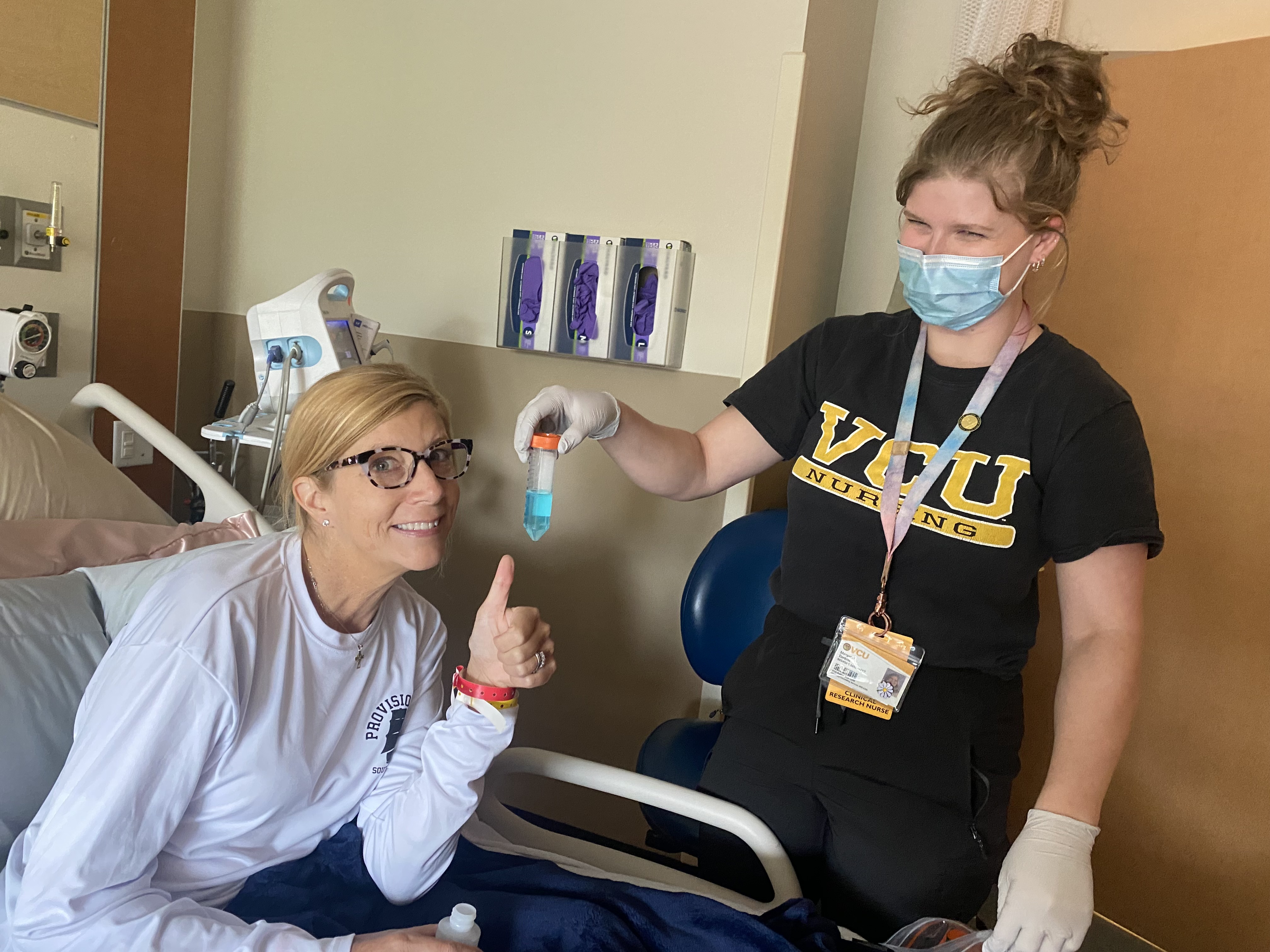
Still, enrolling in a clinical trial does not automatically guarantee success. Unfortunately, Mary Beth did not respond to her clinical trial treatment, which moved her care plan back to a more conventional chemotherapy regimen.
Despite the lack of success in this instance, Maher knows that clinical trials are key to improving cancer outcomes. “Clinical trials are right for everyone. But that doesn't mean that every clinical trial is right for every person. And so it's really this individualized decision, in terms of cancer care.”
“Things never move into the front line unless we do the clinical trials in the first line. The National Clinical Trials Network (NCTN) believes that clinical trials are the standard of care for everyone, and I completely agree with that. Without clinical trials, we don't improve cancer outcomes and they stay the same.”
A son’s choice
While disappointed that the clinical trial did not provide the desired results, Mary Beth also appreciated the direct manner that Maher and her team talked with her: “I never had to guess. There's no sugarcoating it, but I loved that,” Mary Beth recalled.
“We moved to plan B, which was standard of care. Dr. Maher told me exactly how it was going to go, and it went that way. You know, there's always some times that things aren't going to go exactly as planned. I mean, that's the cancer battle, but, Dr. Maher has stayed with me this whole time. She's a lot younger than me, but I almost feel like she's my mom sometimes.”
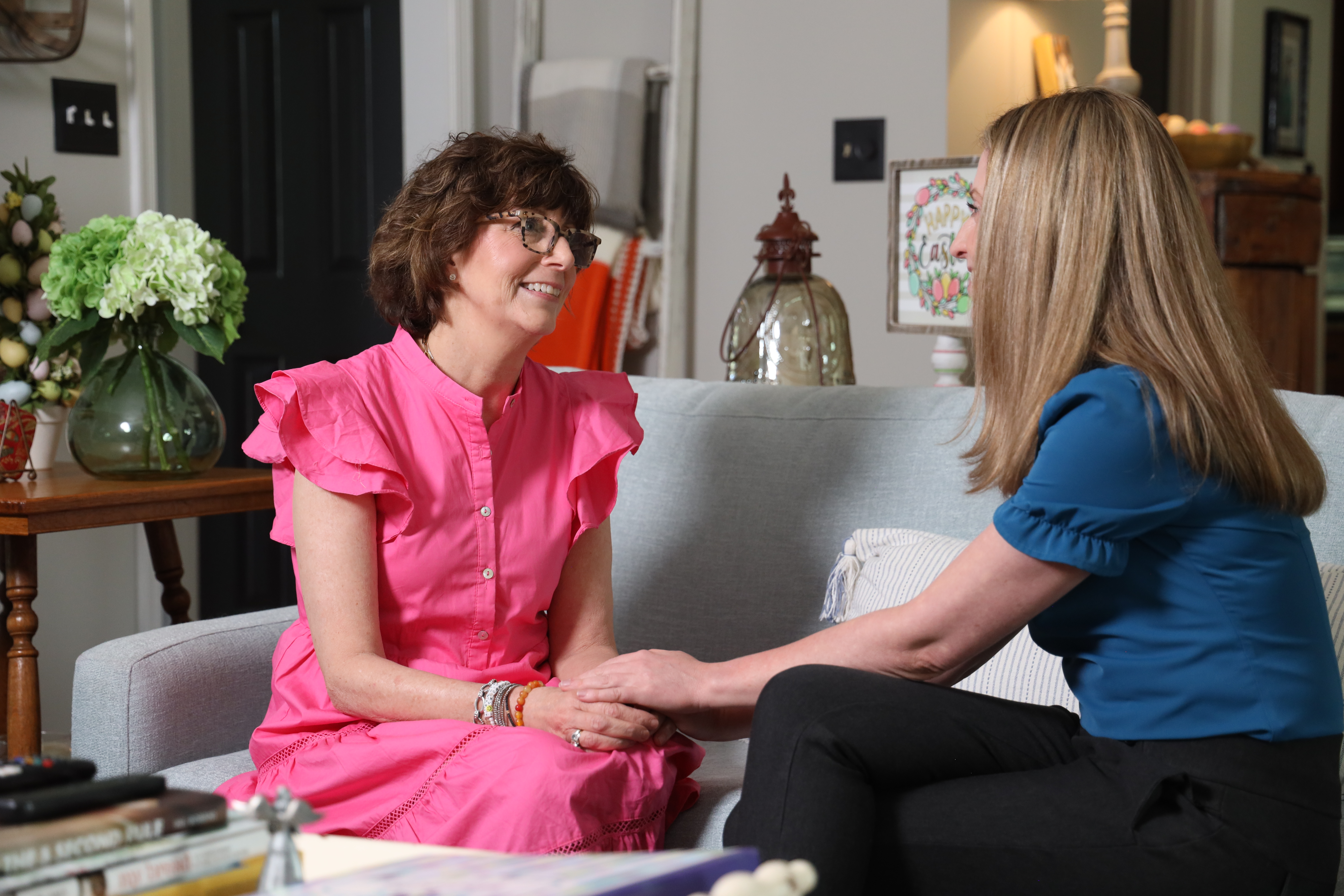 The bond Mary Beth and Dr. Maher built during her treatment continues to this day.
The bond Mary Beth and Dr. Maher built during her treatment continues to this day.
The goal of conventional chemotherapy was to bring Mary Beth’s cancer into a deep enough remission to have a transplant, and she began telling both of her children that they might be candidates to donate stem cells.
For Colin, there was not a second thought about donating stem cells to his mother. “I don't truly remember the conversation, but obviously, yes. It's not something where you even ponder for a second. If it happened to anyone in your family, you wouldn't think about it. It's not some giant task you're doing. You just do it.”
On July 23, 2024, Colin’s stem cells were extracted at City of Hope Cancer Center in Chicago and flown to Richmond. Mary Beth’s infusion occurred the following day on July 24; Colin happened to be 24 at the time, and between the date and year of her infusion, and her son’s age, 24 has become Mary Beth’s lucky number.
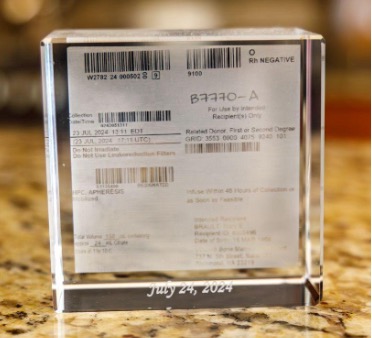 The number 24 - and July 24 - will always hold special meaning to Mary Beth.
Another positive sign that catches Mary Beth is Elton John’s “Someone Saved My Life Tonight.” It has popped up at key moments in her journey, randomly being the first song on Mary Beth’s playlist during her stem cell infusion. And then it played in the car while she was driving to work on her first day back. And then again before a talk she was giving for Blood Cancer United, an organization for which she is an advocate.
The song takes on deeper meaning to Mary Beth when she thinks about Massey’s mission: “That's what Massey is doing every single moment of every day. They're saving someone's life.”
And as only a mother can, she makes sure to share it with Colin. “Poor Colin gets a screen shot every time. But he did. He saved my life.”
“We give our children life. Very few mothers get life back from their children.”
After 31 days at Massey, Mary Beth was sent home for the remainder of her recuperation from the transplant. That was followed by a period of isolation and gradual reentry into her community. Today, Mary Beth is back at work at Hamilton Beach, which held her job for her during her nearly three-year fight.
Mother’s Day is always meaningful. But after overcoming ALL, Mary Beth has a unique appreciation for the journey she has been on.
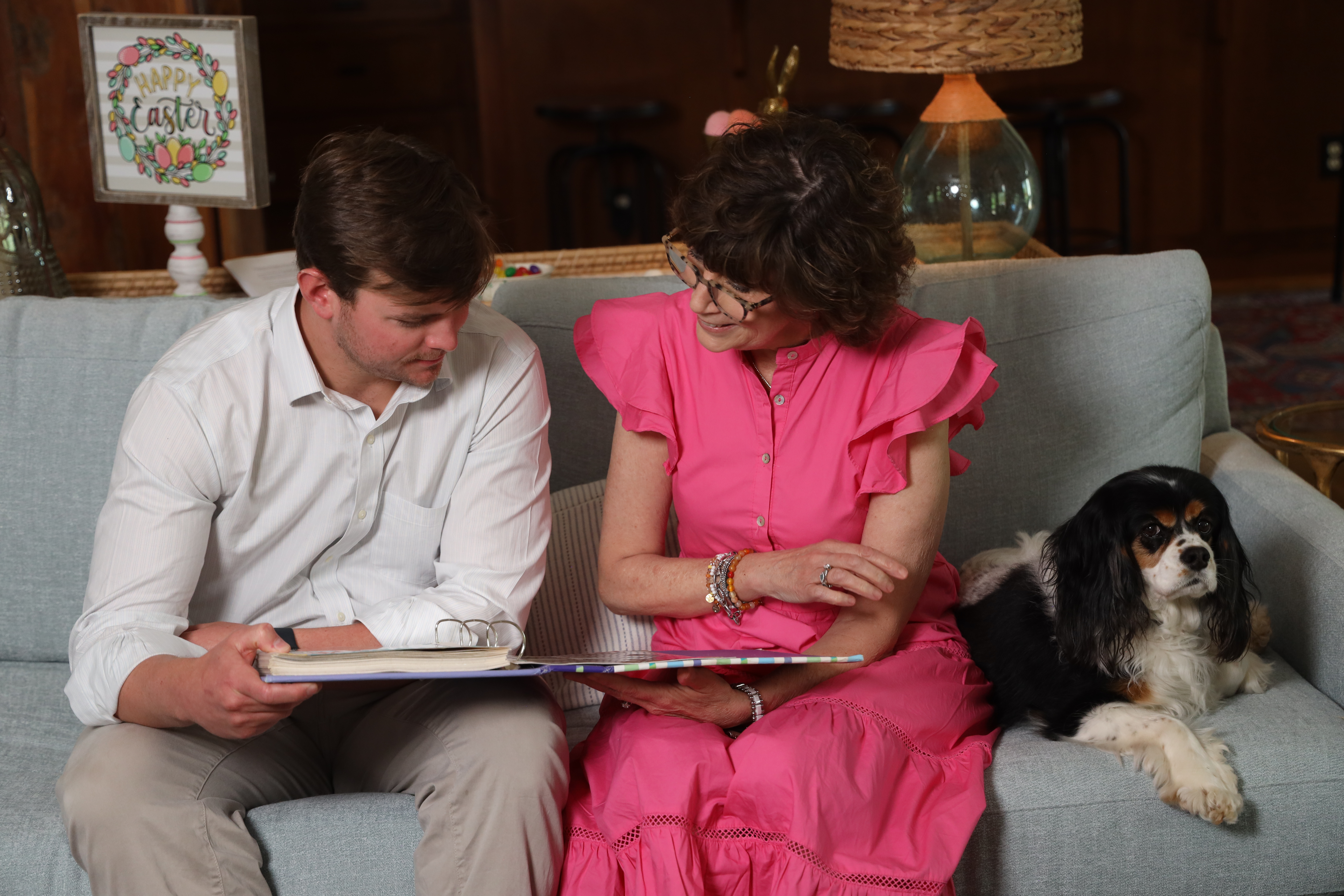 Today, Mary Beth and Colin have many more memories to make thanks to Massey.
“It hits differently now. When I was diagnosed, my first thoughts were, ‘I'm going to miss their weddings. I'm never going to meet my grandchildren.’ And, I get to do that now because of Colin, Dr. Maher, and the support from my husband Fred, the three people that saved my life.
Today, Mary Beth and Colin have many more memories to make thanks to Massey.
“It hits differently now. When I was diagnosed, my first thoughts were, ‘I'm going to miss their weddings. I'm never going to meet my grandchildren.’ And, I get to do that now because of Colin, Dr. Maher, and the support from my husband Fred, the three people that saved my life.
“Mothers, you know, we bring our children into the world. We have them with us for nine months, and then we set them free. Very few mothers get set free by their children. And I got that from Colin. And, that's what Mother's Day is for me.”
Related News
Clinical Care, Prevention , Patient Stories
Cancer care in Southside Virginia: Alan Veeck’s prostate cancer journeySep 21, 2026
Clinical Care, Patient Stories
Riley’s vibrant smile and humongous hugs leave a lasting impressionSep 16, 2026
Get access to new, innovative care
Treatments in clinical trials may be more effective or have fewer side effects than the treatments that are currently available. With more than 200 studies for multiple types of cancers and cancer prevention, Massey supports a wide array of clinical trials.
Find a provider
Massey supports hundreds of top cancer specialists serving the needs of our patients. Massey’s medical team provides a wealth of expertise in cancer diagnosis, treatment, prevention and symptom management.