
Latest News
Research & Innovation
An eye on prevention
Oct 23, 2013
Cancer screening can improve the length and quality of life, but the average American receives only half of recommended cancer preventive services, according to prior research conducted at VCU Massey Cancer Center.
However, further research at Massey has shown that personal health records (PHRs) help increase the number of patients receiving screenings. PHRs with higher functionality, such as records that link patients with their doctor’s records, explain information in lay language, display tailored health recommendations and provide educational resources, may even allow patients to better understand their screening options and seek them out.
Building on these research studies, Massey researchers will conduct a new study supported by a multi-year, multi-phase grant from the National Institutes of Health (NIH) to measure whether making PHRs with higher functionality available to primary care physicians and patients promotes shared health decision-making and increases the delivery of cancer screening compared to existing information systems.
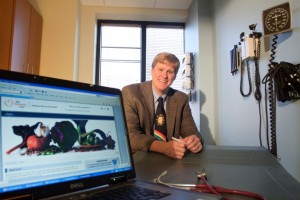
“Evidence-based preventive services for the early detection of cancer and other health conditions offer profound health benefits, yet Americans are receiving only half of these services,” said the study’s principal investigator Alex Krist, M.D., member of the Cancer Prevention and Control research program at VCU Massey Cancer Center, associate professor in the Department of Family Medicine and Population Health in the VCU School of Medicine and director of the VCU Center for Clinical and Translational Research Community Engagement Core. “Our research team developed an interactive personal health records system that uses its higher functionality to more deeply engage patients in health promotion.”
The research team will study whether implementing PHRs with higher levels of functionality will better inform patients and increase the use of preventive services.
“However, realizing this vision in practice requires both technological updates and physician practice engagement. Our prior work in Virginia doctors’ offices demonstrated that patients who used this new interactive system were more up-to-date with preventive care,” said Krist. “This grant will allow us to continue our work by evaluating whether the new system with higher functionality can be implemented in a larger number of practices. We’re also interested in looking at how its adoption and use differs for minority and disadvantaged patients.”
The project consists of two phases. During phase one, the team will randomize 46 physician practices from three practice-based research networks in eight states to implement personal health records with advanced versus simpler functionality. They then will assess the new system’s implementation, including how well the system is adopted and used by patients.
In the second phase of the project, the networks will offer the new interactive system to a larger number of its patients. The team will observe whether the networks can successfully implement this system more broadly.
“This project will evaluate whether a unique online information resource, designed in partnership with doctors and patients, can effectively empower patients and be broadly implemented and disseminated, particularly in physician practices serving disadvantaged patients,” Krist said. “The study will inform future efforts to use patient-centered information technology to promote cancer prevention and the feasibility of offering it to patients on a national scale.”
Re-purposed from an article by Frances Dumenci, University Public Affairs
Written by: Kimberly Lammi
Related News
Research & Innovation, Clinical Care, Prevention , Leadership
International community gathers for 2026 Global Cardio-Oncology Summit in WilliamsburgOct 14, 2026
Research & Innovation
Simulating cellular environments to fight advanced prostate cancerOct 7, 2026

Get access to new, innovative care
Treatments in clinical trials may be more effective or have fewer side effects than the treatments that are currently available. With more than 200 studies for multiple types of cancers and cancer prevention, Massey supports a wide array of clinical trials.

Find a provider
Massey supports hundreds of top cancer specialists serving the needs of our patients. Massey’s medical team provides a wealth of expertise in cancer diagnosis, treatment, prevention and symptom management.