
Latest News
Research & Innovation
Massey discovery of new protein shape could impact cancer and neurodegenerative disease therapies
Dec 15, 2017
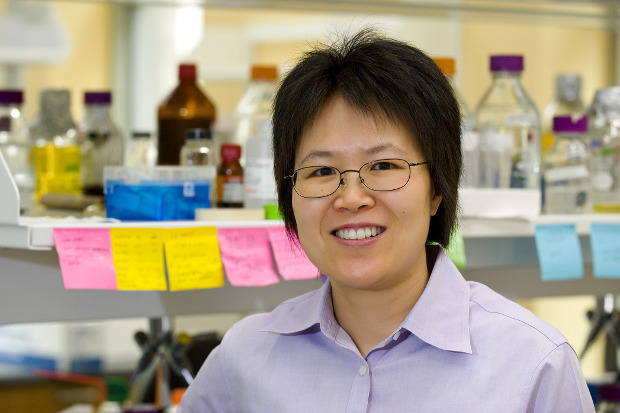
A VCU Massey Cancer Center researcher has discovered a new conformation of a common protein group with links to cancer metastasis and neurodegenerative diseases.
Qinglian Liu, Ph.D., a member of Massey’s Developmental Therapeutics research program and an associate professor in the Department of Physiology and Biophysics at VCU School of Medicine, recently found a third variation in the structure of the protein type Hsp70, which is responsible for the growth and repair of other proteins. Her findings were published in the journal Nature Communications on Oct. 31. The discovery could eventually lead to the development of small molecules that could either improve or curtail the function of Hsp70.
Hsp70, or 70 kilodalton heat shock protein, accounts for about 2 percent of the more than 100,000 protein types in the human body. The protein is a chaperone, which means it helps other proteins develop a shape. A protein’s shape helps determine its function. When proteins lose their shape from deterioration due to illnesses such as fevers, or from environmental stressors such as overexposure to sunlight, Hsp70 helps them reform.
“Everything we do, we can do because proteins function,” Liu said. “Our cells are made of proteins and they all must fulfill their roles, similar to how everyone has a specific job in our society. She added that the role of Hsp70 is maintaining the health of proteins.
Finding the third shape of Hsp70 helps researchers uncover the biochemical function of this protein group.
“Understanding how the three shapes fit together reveals the process that Hsp70 goes through to fold proteins,” Liu said. “When you see all the shapes together, you can picture a video of them working in sequence to fold a protein.”
The first Hsp70 shape was discovered in 1996. Liu found the second shape in 2012 and more shapes await discovery after Liu’s most recent finding.
Hsp70’s ability to fold proteins and rebuild them once they lose their shape may hold part of the key to cures for cancer and certain neurological diseases, Liu said.
An overabundance of Hsp70 has been linked to cancer metastasis. Hsp70 can cause the proteins in cancer cells to continually fold, which exacerbates cell growth.
The opposite problem occurs in patients with neurodegenerative diseases such as Alzheimer’s and Parkinson’s disease. In the case of Alzheimer’s, patients experience dangerous protein aggregates in the brain called amyloid plaques. Instead of being repaired after losing their shape, the proteins form these harmful buildups because there are not enough Hsp70s available to refold the proteins.
“We cannot survive without Hsp70, but it must be balanced,” Liu said. “We can’t have too much or too little. Once we understand more about Hsp70’s activity, we can design small molecules to modulate the activity of the protein, which could prevent or slow the growth of certain diseases.”
Re-purposed from an article by Leah Small, University Public Affairs
Written by: University Public Affairs
Related News
Research & Innovation, Clinical Care, Prevention , Leadership
International community gathers for 2026 Global Cardio-Oncology Summit in WilliamsburgOct 14, 2026
Research & Innovation
Simulating cellular environments to fight advanced prostate cancerOct 7, 2026

Get access to new, innovative care
Treatments in clinical trials may be more effective or have fewer side effects than the treatments that are currently available. With more than 200 studies for multiple types of cancers and cancer prevention, Massey supports a wide array of clinical trials.

Find a provider
Massey supports hundreds of top cancer specialists serving the needs of our patients. Massey’s medical team provides a wealth of expertise in cancer diagnosis, treatment, prevention and symptom management.