Eligibility
The WLSWI is open to students who have completed qualifying exams at the PhD level and post-doctoral trainees. You must be a U.S. citizen or U.S. permanent resident.
The program is reserved for students/trainees with an interest in scientific writing and science communications. Individuals not interested in pursuing a scientific writing career away from the bench/academic research as a PI will not be considered. All VCU-affiliated candidates who receive funding from VCU cannot participate in WLSWI without approval from their academic advisor and/or program director.
Program Dates and Times
The WLSWI is a six-week, fully remote learning experience from May 31 to July 9, 2027 . You must be able to attend the program virtually every day from 10 a.m. to 4 p.m. EST.
Program Components
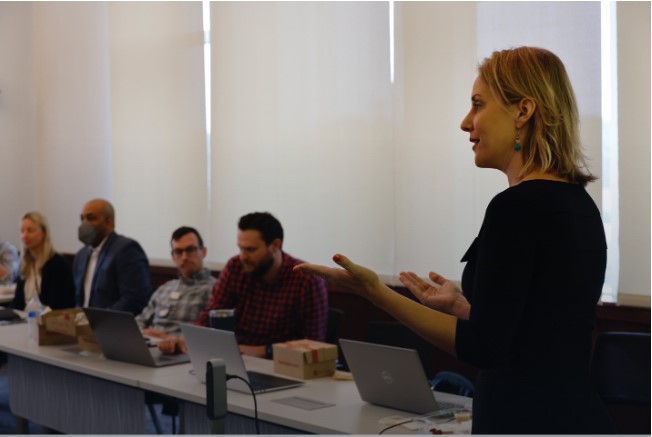
Interns will participate in daily 1-2 hour didactics or panel discussions with writing experts followed by 1-2 hours of topic-related writing assignments that are reviewed and discussed as a group. You will also complete a longitudinal science writing project in focus areas of the initiative, such as areas of grant writing, manuscript writing, protocol writing and public-facing communications. You will meet 1-2 times weekly with an assigned mentor from Massey’s Office of Research Development and Office of Marketing, Communications & Public Relations .
Application Requirements
An online application as well as two letters of recommendation from an academic advisor, teacher, supervisor, mentor or similar reference. Applicants should demonstrate academic excellence, intellectual curiosity and the ability to work in teams.
Download and review the letter of recommendation guidelines
Stipend Award
Interns will receive a taxable stipend of $3,000. The stipend will be paid in installments throughout the program.
Training Environment
Virginia Commonwealth University (VCU) is a top-50 ranked public research university (R1) in the U.S. with deep ties to innovation, creativity and the community it serves. Nationally recognized for its robust research enterprise, VCU serves as a scientific hub for innovation that bridges state-of-the-art technology with renowned faculty expertise across a variety of disciplines. Located in Richmond, the capital of the Commonwealth of Virginia, VCU sits alongside the James River line in the Piedmont region, and serves as the center of the metropolitan area known for its rich cultural history.
VCU is home to six schools—medicine, public health, dentistry, pharmacy, nursing and health professions—and is one of only two NCI-designated Comprehensive Cancer Centers in Virginia. VCU Massey has more than 140 members representing more than 25 academic departments across six VCU schools and colleges and are organized into three nationally-ranked research programs .
WLSWI Testimonials
Nicole Gadda, Ph.D.
“The field of scientific writing is enormous, and the WLSWI was a phenomenal opportunity to work closely with expert mentors in different areas of the field. We gained invaluable experience in grant writing, scientific and manuscript writing, scientific communication and outreach, clinical protocol writing, and data presentation. I knew I was interested in scientific writing before the internship, but rotating with different teams allowed me to identify the exact field I want to enter, while gaining hands-on experience that will make me a competitive applicant. I’d highly recommend this internship to anyone interested in pursuing scientific writing!”
Nina Obertopp, Ph.D.
“The WLSWI gave me great insight into what scientific writing truly entails and how multifaceted it is. Over the course of the internship, I gained hands-on exposure to many different domains of scientific writing, including grant, manuscript, and protocol writing, as well as public facing communication, and I had the chance to meet and interact with all the different groups involved. Everyone was incredibly welcoming and supportive, and I am grateful for the mentorship and hands-on experience I gained. This experience reinforced my passion for making science understandable and impactful beyond the laboratory ”