
Latest News
Research & Innovation
April-June 2026: Published research at Massey
Jul 24, 2026
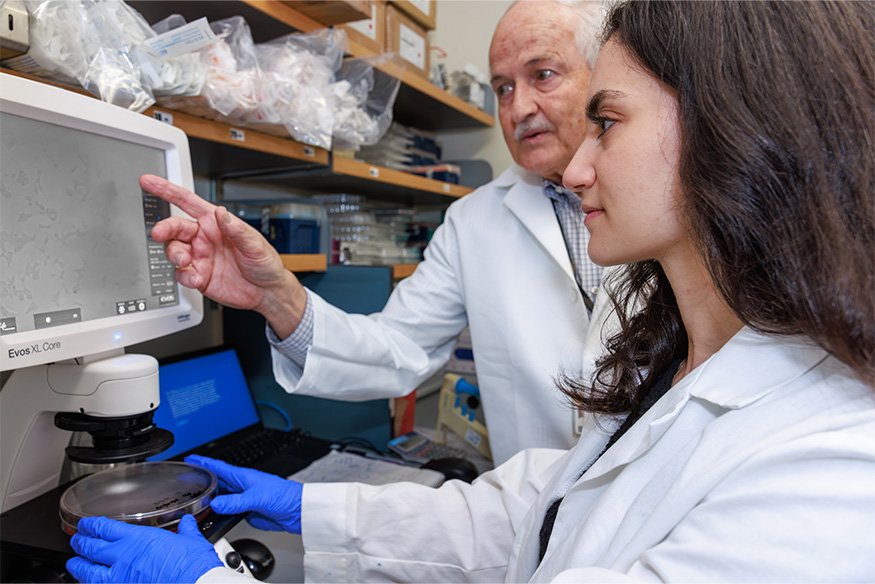
As one of just two NCI-designated Comprehensive Cancer Centers in Virginia, VCU Massey Comprehensive Cancer Center is at the forefront of the nation’s cancer research efforts. Scientists at Massey conduct cutting-edge, laboratory-based basic, population, and clinical and translational-focused research to advance improved approaches to prevent, diagnose and treat cancer. Continue reading to learn more about publications from Massey researchers in April, May and June 2026.
PUBLISHED RESEARCH
Guidelines needed for cirrhosis patients with genetic condition
Massey research member: Bassam Dahman, Ph.D.
Journal: Clinical and Translational Gastroenterology
Publication date: April 2026
Alpha-1 antitrypsin deficiency (AATD) is a genetic condition that increases risk for chronic lung and liver diseases. This study, supported in part by Massey funding, suggests that guidelines are needed to emphasize universal AATD testing in patients with cirrhosis regardless of the presence of another risk factor.
VCU collaborator: Dustin Bastaich, MS
Advancing cervical cancer research through biobanking
Massey research members: Katherine Y. Tossas, Ph.D., and L. Ashley Cowart, Ph.D.
Journal: Cancer Epidemiology, Biomarkers & Prevention
Publication date: April 1, 2026
Cervical cancer remains a major global health concern, with disparities in screening access and outcomes, particularly among younger women in the U.S. This report outlines a framework for establishing a cervical cytology biobank using residual clinical specimens. The resource supports future molecular epidemiology studies aimed at identifying biomarkers, understanding cervical cancer progression and addressing reproductive health disparities.
VCU collaborators: Bahira Ahmed, Gregory A. Buck, Ph.D., Laahirie Edupuganti, Bianca D. Owens, Ph.D., MS, Ciara Rhodes, Ph.D., Sadia Sayeed, M.D., Myma G. Serrano, Ph.D., Guleer Shahab, MPH, and Katherine M. Spaine
Study highlights critical need in survivorship care
Massey research members: Susan Hong, M.D., and Oxana Palesh, Ph.D.
Journal: Cancer Medicine
Publication date: April 6, 2026
As cancer survival improves, the population at risk for additional primary cancers is growing rapidly. This study evaluated long-term trends in subsequent cancer risk among surivors. The findings support the need for updated surveillance protocols, and they inform national cancer control strategies aimed at reducing long-term health issues among survivors.
VCU collaborators: Hui G. Cheng, Ph.D., and Livingstone Aduse-Poku, Ph.D.
Perceived discrimination, neighborhood deprivation and cancer-related outcomes
Massey research members: Bernard F. Fuemmeler, Ph.D., MPH, Carrie A. Miller, Ph.D., MPH, Bassam Dahman, Ph.D., and Robert A. Winn, M.D.
Journal: Journal of the National Cancer Institute
Publication date: April 6, 2026
New study findings highlight the importance of integrating both social experience and structural conditions in future cancer prevention research. For practice and policy, the results underscore the need for multilevel strategies and targeted prevention efforts to reduce behavioral cancer risk.
VCU collaborators: Jeremy D. Barsell, M.S., Obinna R. Diala, MBBS, MPH, and Anita M. Kumar, Ph.D., MPH
Post-transplant cyclophosphamide allows allogeneic hematopoietic stem-cell transplantation across donor types for nonmalignant hematologic diseases
Massey research member: Xiaoyan Deng, MS
Journal: Journal of Hematology
Publication date: April 6, 2026
A recent study found that allogeneic hematopoietic cell transplantation—with uniform conditioning of fludarabine-cyclophosphamide-ATG-TBI with PTCY GVHD prophylaxis—is effective for adults with severe aplastic anemia or Diamond-Blackfan anemia across donor types and should be prospectively compared with historical regimens using CNI-MTX GVHD prophylaxis.
VCU collaborator: Baldeep Wirk, M.D.
Study suggests environmental factors may play relevant role in breast cancer and lung cancer
Massey research members: Patrick Nana-Sinkam, M.D., Kandace McGuire, M.D., Bernard F. Fuemmeler, Ph.D., MPH
Journal: Cancer Causes & Control
Publication date: April 15, 2026
Better understanding of the environment’s role in breast cancer and lung cancer incidence is crucial for population health. Through two case-control studies, researchers of this study identified evidence for the role of ethylene oxide and chromium emissions for the development of breast cancer, and formaldehyde and chromium emissions for lung cancer.
VCU collaborator: Joseph Boyle, Ph.D.
Study endorses targeted therapy in HER2-positive breast cancer
Massey research member: Yuesheng Zhang, Ph.D.
Journal: Scientific Reports
Publication date: April 20, 2026
p95HER2 is commonly expressed in HER2-positive breast cancer, and it drives aggressive tumor growth and contributes to drug resistance. This study suggests that PEPDG278D —a HER2 inhibitor—is effective at targeting p95HER2 and could serve as a highly promising antitumor agent in HER2-positive breast cancer.
VCU collaborators: Lu Yang, Ph.D., Arup Bhattacharya, Ph.D., Yun Li, MS, and Darrell Peterson
Massey researchers lead multi-decade analysis of new cancer incidence among survivors
Massey research members: Susan Hong, M.D., and Oxana Palesh, Ph.D., MPH
Journal: PLOS Medicine
Publication date: April 28, 2026
As people continue to live longer and the survival rate of cancer diagnoses increases, researchers led a multi-decade analysis studying the rates of subsequent primary cancers, which are new cancers unrelated to the original diagnosis. The study provides understanding for how these cancer risks change over time and across generations, helping guide future prevention and monitoring measures.
VCU collaborators: Hui Cheng, Ph.D., Livingstone Aduse-Poku, M.D., and Chelsey McGill, Ph.D.
Massey researchers discover pathway to open new possibilities for glioblastoma treatment
Massey research members: Suyun Huang, Ph.D.
Journal: Neuro-Oncology
Publication date: May 2, 2026
New research gives a glimpse at promising discoveries that could help shape the future of glioblastoma treatment and patient outcomes. A team of scientists uncovered a protein, TRNAU1AP, that plays an essential role in helping glioblastoma cells survive and multiply, along with a potential pathway to make these cancer cells more vulnerable to treatment.
VCU collaborators: Xiaowei Zhang, Ph.D., Li Li, Linlin Li, Ph.D., Shijun Yu, Ph.D., Taohui Ouyang, Xiao Han, Richard I Joh and Huizhi Wang
Long-term survival disparities by race and ethnicity among cancer survivors in U.S.
Massey research members: Katherine Y. Tossas, Ph.D., MS, Susan Hong, M.D., Renato Martins, M.D., and Oxana Palesh, Ph.D.
Journal: Cancer Medicine
Publication date: May 6, 2026
Cancer survivors are increasingly living beyond five years post-diagnosis and are projected to exceed 26 million in the U.S. by 2040. These findings highlight the need for long-term, risk-based and tailored survivorship care to reduce racial and ethnic differences in cancer outcomes.
VCU collaborators: Hui G. Cheng, Ph.D., Livingstone Aduse-Poku, M.D., and Robert A. Winn, M.D.
How studying oral inflammatory diseases can help researchers understand other human diseases
Massey research members: Kevin Matthew Byrd, DDS, Ph.D., and Jinze Liu, Ph.D.
Journal: Nature Communications
Publication date: May 8, 2026
A team of researchers published a study examining why some oral inflammatory diseases progress much more rapidly than others. The findings identified previously unrecognized changes in blood vessels that may help researchers better understand tissue destruction in oral disease and provide insights relevant to other inflammatory conditions, including cancer.
VCU collaborators: Quinn T. Easter, Ph.D., Khoa L.A. Huynh, Ph.D. and Bruno F. Matuck
Combination treatment harnesses cellular recycling system to fight multiple myeloma
Massey research members: Steven Grant, M.D., Hisashi Harada, Ph.D., and Senthil Radhakrishnan, Ph.D.
Journal: Cell Death & Disease
Publication date: May 11, 2026
New research provides promising evidence for an innovative combination treatment strategy that uses cells’ waste removal functions to effectively dismantle multiple myeloma. The findings show how an experimental targeted protein degrader, developed in-house at Massey, enhances the destruction of a specific cancer cell survival protein and works in tandem with existing drugs in preclinical models, while showing limited toxicity in cardiac models.
VCU collaborators: Ahmed Elshazly, B.Pharm., Nayyerehalsadat Hosseini, Ph.D., Xiaoyan Hu, Ph.D., Victoria Neely, Piyusha Pagare, Ph.D., Shanwei Shen, M.D., Ph.D., and Janakiram Vangala, Ph.D.
Popular weight loss, diabetes drugs linked to improved breast cancer survival
Massey research members: Bernard F. Fuemmeler, Ph.D., MPH, Bassam Dahman, Ph.D., and W. Greg Hundley, M.D.
Journal: JAMA Network Open
Publication date: May 11, 2026
New research offers illuminating evidence suggesting there is a positive association between GLP-1 agonists—drugs commonly used to treat obesity and diabetes—and better outcomes among breast cancer patients. GLP-1 use was associated with an overall lower risk of death from any cause over a 10-year follow-up period among breast cancer patients and a significantly lower risk of cancer recurrence over 10 years following their initial treatment.
VCU collaborators: Kristina L. Tatum, PsyD, MS, J. Brian Cassel, Ph.D., Obinna Diala, MBBS, MPH, Kandace P. McGuire, M.D., and Racheal Oladimeji
Terminator viruses could pave the way for improved cancer treatments
Massey research members: Paul B. Fisher, Ph.D., FNAI, Swadesh K. Das, Ph.D., and Devanand Sarkar, MBBS, Ph.D.
Journal: Advances in Cancer Research
Publication date: June 4, 2026
Cancer terminator viruses (CTVs) are next‑generation forms of adenoviruses that combine precise tumor targeting, direct cancer cell destruction and potent cytokine‑mediated immunotherapy into a single platform. A new paper suggests that further investigation will pave the way for applying these CTVs for improved cancer treatments in the clinic.
VCU collaborators: Pritam Kumar Roy, Shahid Maqbool Mir, Narsimha Mamidi, Theresa Gammel, David Limbrick, Jr., and Padmanabhan Mannangatti
Study advances understanding of brain cell diversity
Massey research members: Tomasz Kordula, Ph.D., and Katarzyna Tyc, Ph.D.
Journal: Glia
Publication date: June 12, 2026
New study findings advance the scientific understanding of astrocyte diversity in the part of the brain known as the cerebellum. Astrocytes are the most abundant glial cells in the central nervous system and regulate the functions of neural circuits. Massey provided critical microscopy resources for this research.
VCU collaborators: Masoumeh Zarei-Kheirabadi, Ph.D., Maryam Ashrafi Kheirabadi, Lauren Dain, Jennifer Hanco, Adam McQuiston, Ph.D., Karli Mockenhaupt, Soha Munir and Sandeep Singh, Ph.D.
Neoadjuvant endocrine therapy should be considered as effective option for hormone receptor-positive breast cancer
Massey research member: Harry D. Bear, M.D., Ph.D.
Journal: Clinical Breast Cancer
Publication date: June 18, 2026
This study demonstrates there is an underutilization of neoadjuvant endocrine therapy for the treatment of hormone receptor-positive breast cancer, despite its low toxicity and efficacy in improving patient outcomes. The authors suggest increased efforts are needed to address this gap and neoadjuvant endocrine therapy should be considered as an effective option for this type of breast cancer.
VCU collaborators: Anna E. Gibson, M.D., and Jian He, Ph.D.
Cancer survivors and providers differ in views on medical cannabis, study finds
Massey research members: Sunny Jung Kim, Ph.D., Susan Hong, M.D., and Vanessa B. Sheppard, Ph.D.
Journal: Journal of Cancer Education
Publication date: June 20, 2026
A new study surveyed 395 cancer survivors and 62 cancer care providers to better understand those perspectives. The study found that while survivors and providers agreed on many aspects of medical cannabis, they differed in their awareness of potential risks and their comfort discussing it.
VCU collaborators: Aron H. Lichtman, Ph.D., Hannah Ming, Ph.D., and Farnese M. Motto, MSPH
Nasal swabs could enhance early-point-of-care diagnostics in sinonasal disease
Massey research member: Kevin Byrd, DDS, Ph.D.
Journal: npj Precision Oncology
Publication date: June 22, 2026
Sinonasal malignancies, including sinonasal carcinomas, frequently present with symptoms overlapping chronic inflammatory conditions, complicating early detection and delaying treatment. Using a deep learning-enabled reference atlas, these findings support the potential use of nasal swabs in early point-of-care diagnostics.
VCU collaborators: Brittany Rupp, Ph.D., Quinn Easter, Ph.D., and Theresa Weaver
Targeting MDA-9/syntenin-1 as a strategy to eliminate head and neck cancer stem cells
Massey research members: Paul B. Fisher, Ph.D., MPH, FNAI, Jiong Li, Ph.D., and Swadesh K. Das, Ph.D.
Journal: Cancer Letters
Publication date: June 27, 2026
These study results demonstrate that targeting MDA-9 with IVMT-Rx-4 is an effective strategy for treating head and neck cancer by eliminating cancer stem cells, and IVMT-Rx-4 is a promising chemical entity that may be amenable for developing an effective therapy for disease.
VCU collaborators: Grace J. Rilee, Zhikun Ma, Rosalie G. Hoyle, Ph.D., Kanakaraju Manupati, Ph.D., and Shadid U. Zaman, Ph.D.
Oral chemotherapy strategy enhances therapeutic efficacy in advanced melanoma
Massey research members: Swadesh K. Das, Ph.D., and Paul B. Fisher, Ph.D., MPH, FNAI
Journal: Cells
Publication date: June 29, 2026
The pro-metastatic gene MDA-9/Syntenin-1 and its associated PDZ domains provide established targets for intervening in tumor progression and metastasis. These findings highlight IVMT-Rx-3-ME as an effective form of oral chemotherapy for metastatic melanoma, with enhanced translational potential when combined with immunotherapies.
VCU collaborators: Ehsan Kaffash, Padmanabhan Mannangatti, Rudra Pangeni, Qingguo Xu, Madeline Gunawardena, Mark C. Mochel, and Nitai D. Mukhopadhyay, Ph.D.
PERSPECTIVES
Improving preclinical cancer drug development models to avoid clinical failure
Massey research member: David A. Gewirtz, Ph.D.
Journal: Clinical Cancer Research
Publication date: June 15, 2026
This perspective explores many of the challenges that limit the utility of preclinical models commonly used for the development of antitumor drugs. The research team identified factors that can be modified to improve their ultimate translation to the clinic, particularly given efforts to replace the use of animal models with human cell–based and computer-based assays for drug development.
PUBLISHED REVIEWS
The regulation and function of Hippo/YAP pathway in cancer
Massey research member: Yue Sun, Ph.D.
Journal: The FASEB Journal
Publication date: April 2, 2026
The Hippo/YAP signaling pathway is a key regulatory network that governs organ size, tissue homeostasis, cell proliferation, and cell polarity. This review summarizes the current knowledge of the core components of the Hippo/YAP pathway.
VCU collaborators: Chinmoy Ghosh, Ph.D., Ruchi Kakar and Seline Torkamboor
The role of FOSL1 in inflammatory bowel disease pathogenesis and IBD-associated tumorigenesis
Massey research members: Jiong Li, Ph.D., and Senthil Radhakrishnan, Ph.D.
Journal: Biomolecules
Publication date: April 27, 2026
Inflammatory bowel diseases (IBD), including ulcerative colitis and Crohn’s disease, are chronic inflammatory disorders of the gastrointestinal tract associated with an increased risk of cancer. This review summarizes the current knowledge on the regulation and function of FOSL1 in intestinal inflammation and IBD-associated cancers.
VCU collaborators: Grace Rilee and Guang-Yu Yang, M.D., Ph.D.
Mcl1 as a molecular switch linking inflammatory bowel diseases to colorectal tumorigenesis
Massey research members: Senthil Radhakrishnan, Ph.D., and Jiong Li, Ph.D.
Journal: Biomolecules
Publication date: May 7, 2026
The maintenance of gastrointestinal homeostasis relies on a tightly coordinated interplay between the intestinal epithelium, the immune system, and the commensal microbiome. This review synthesizes recent advances showing how Mcl1 integrates epithelial cell-fate decisions, immune signaling and tumor evolution across the inflammatory bowel disease–cancer continuum.
VCU collaborators: Ahmed Elshazly, B.Pharm., and Guang-Yu Yang, M.D., Ph.D.
Written by: Blake Belden
Related News
Research & Innovation, Clinical Care, Prevention , Leadership
International community gathers for 2026 Global Cardio-Oncology Summit in WilliamsburgOct 14, 2026
Research & Innovation
Simulating cellular environments to fight advanced prostate cancerOct 7, 2026

Get access to new, innovative care
Treatments in clinical trials may be more effective or have fewer side effects than the treatments that are currently available. With more than 200 studies for multiple types of cancers and cancer prevention, Massey supports a wide array of clinical trials.

Find a provider
Massey supports hundreds of top cancer specialists serving the needs of our patients. Massey’s medical team provides a wealth of expertise in cancer diagnosis, treatment, prevention and symptom management.